Welcome, fellow traveler, to a journey into the heart of Japanese spirituality and natural beauty.
If you’ve ever searched for images of Japan, you’ve undoubtedly been captivated by a crimson-red gateway seemingly floating on the serene blue waters of the Seto Inland Sea. That magnificent structure is The Grand Torii Gate of Itsukushima (or sometimes referred to as the Miyajima Floating Torii Gate), and it is much more than just a photo opportunity. It is a profound cultural symbol, a testament to the enduring power of Shinto beliefs, and a UNESCO World Heritage site that truly embodies the spirit of Japan.
For many years, I dreamt of witnessing this sight firsthand, waiting for the perfect tide to reveal its majesty. Standing there, feeling the history and the deep connection between the sea and the sacred land of Miyajima, I realized that understanding The Grand Torii Gate of Itsukushima requires looking beneath the surface—not just the water, but the layers of history, beliefs, and traditions that surround it. This comprehensive guide will take you beyond the stunning visuals, delving into the gate’s history, the deep torii symbolism it holds, and practical advice on planning your unforgettable visit.
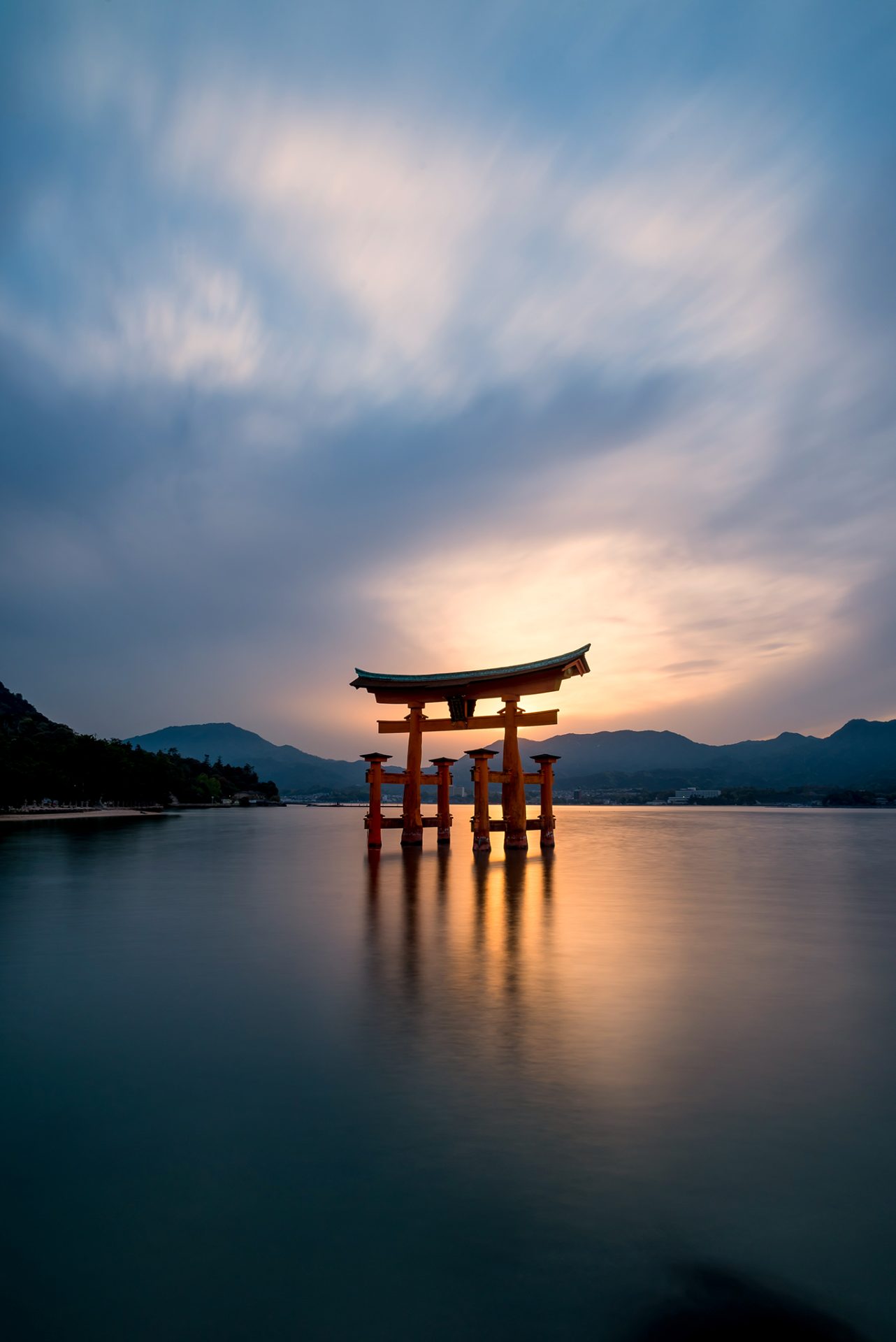
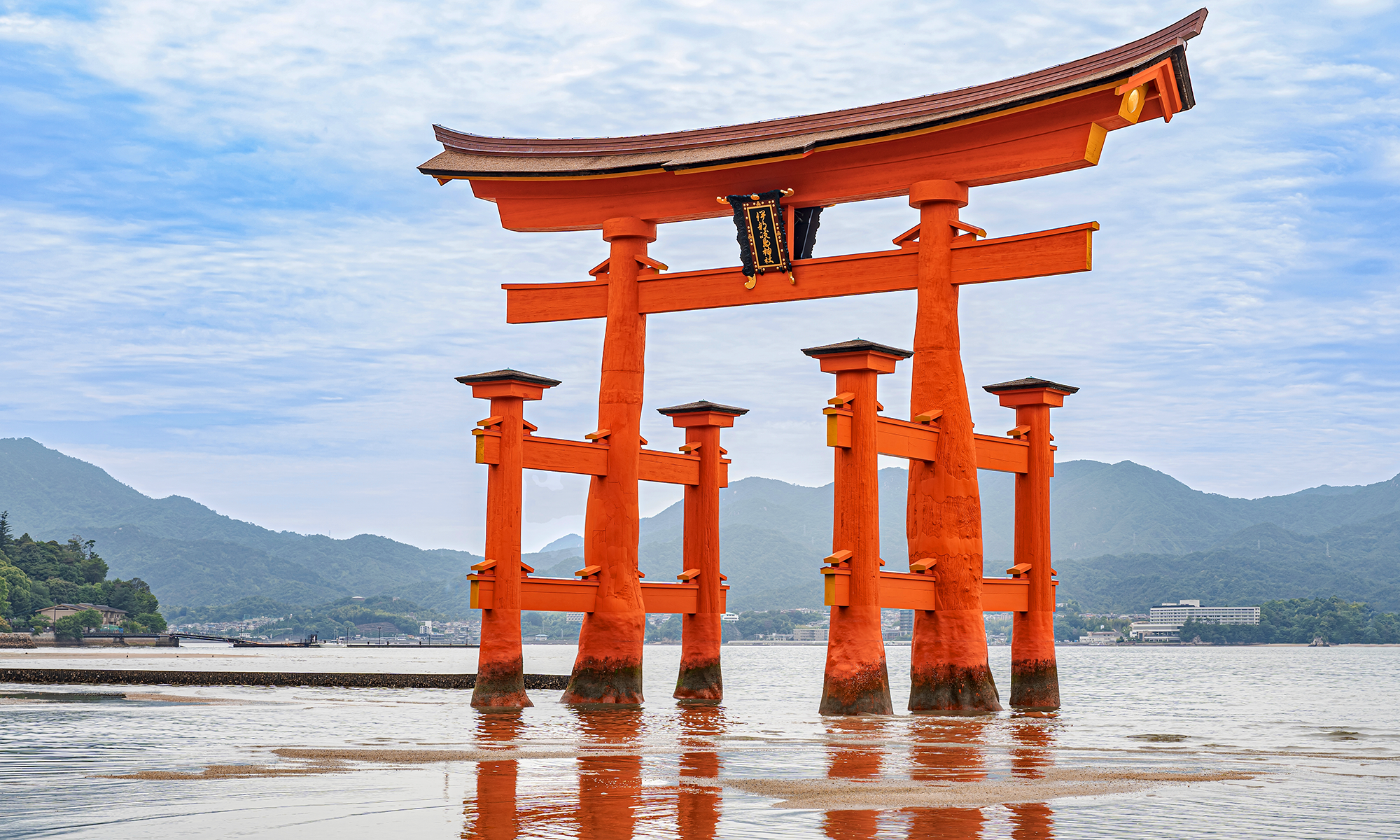
Torii Gate of Itsukushima Hiroshima Japan
1. The Grand Torii Gate of Itsukushima – Japan’s Floating Icon
The sheer majesty of The Grand Torii Gate of Itsukushima lies in its unique architectural placement. It stands roughly 200 meters offshore from the main Itsukushima Shrine complex on Miyajima Island, near Hiroshima.
A Pillar of Resilience: The current gate is the eighth iteration, having been rebuilt many times throughout history, with the most recent one being completed in the late 19th century (1875). It is constructed entirely of unpainted camphorwood, with the vibrant vermilion color applied as a natural, traditional protective lacquer. This color, shu, is highly significant in Shinto beliefs, symbolizing vitality, protection against evil, and life itself.
Architectural Marvel: Unlike most torii gates, the columns of The Grand Torii Gate of Itsukushima do not rely on being buried deep into the seafloor. Instead, it maintains its balance through a clever structural design: the sheer weight of the roof (kasagi) and the stability provided by four supplementary pillars (yotsushibasira) flanking the main two. Furthermore, the base of the pillars is filled with stones and packed gravel to anchor the structure against the tides and strong currents of the Seto Inland Sea. This ingenious engineering has allowed it to stand proudly for centuries, bowing only to the rhythm of the ocean.
The Sacred Boundary: The gate’s primary purpose is ceremonial. It marks the solemn boundary between the mundane world and the sacred domain of the Itsukushima Shrine. For centuries, pilgrims approaching the island would sail their boats through the gate, symbolizing their entrance into the divine realm.
2. A Brief History of the Itsukushima Shrine and Its Legendary Gate
To truly appreciate The Grand Torii Gate of Itsukushima, one must understand its inseparable connection to the Itsukushima Shrine itself.
Early Origins: The shrine dates back to the 6th century (593 AD), but it was during the Heian Period (794–1185) that the shrine truly flourished and took its current floating form. The great military leader Taira no Kiyomori, a devout patron of the shrine, decided to rebuild the entire complex in 1168.
Why the Floating Design? The island of Miyajima itself was considered so sacred that commoners were forbidden from setting foot on its soil. To allow worshippers to pay homage without desecrating the sacred land, the shrine, along with its gateway, was built over the water. This remarkable tradition dictates that only the priests and aristocratic pilgrims could approach the shrine via the sea, sailing through the gate and docking at the main platform. The entire shrine complex, including its famous stage for Noh and Bugaku performances, looks as though it is gliding on the water during high tide.
Rebuilding the Grand Torii Gate of Itsukushima: The structure we see today is a late-comer, a testament to enduring faith. Although the gate’s form has remained largely consistent, it was the 1875 reconstruction that established the gate’s legendary status, utilizing the strongest camphorwood to withstand the ocean elements, ensuring that this cultural symbol would inspire future generations. The recent major renovation, which occurred between 2019 and 2022, ensures that the structure is secure for many more centuries of worship and admiration.
3. The Meaning Behind the Floating Torii Symbolism
The meaning of torii Japan is profound, representing the transition from the profane to the sacred. But the symbolism of this specific floating gate is uniquely powerful, blending Shinto spiritual concepts with the raw power of nature.
Torii Gate of Itsukushima Hiroshima Japan
- The Sacred Boundary: At its most fundamental, the gate serves as the shin’iki (sacred area) marker, distinguishing the deity’s space (kami) from the world of humans. Passing under the gate is a ritual act of purification.
- Respect for Nature and Miyajima: The floating nature of The Grand Torii Gate of Itsukushima reflects the core Shinto beliefs that the land itself is divine. Building the structure over the water, rather than on the island, demonstrates ultimate respect for the island’s mountainous kami (deity).
- The Color Vermilion: The striking red (shu) is central to the gate’s protective symbolism. It is an ancient color believed to ward off evil spirits and disease. Its brightness against the blue sea and green mountains enhances the gate’s role as a beacon of spirituality and vitality.
- Torii Design: The specific architectural style of this gate, the Ryobu Torii (or Yotsubashira Torii), is characterized by its four supporting pillars. This distinct style is closely associated with Shingon Buddhism and Shinto blending (Shinbutsu-shūgō), reflecting a historical period where the two faiths coexisted and influenced each other heavily.
The meaning of torii Japan here is magnified by the tidal changes; the gate visually transforms twice daily, reinforcing the Shinto beliefs in the constant, dynamic nature of the divine presence.
4. When and How to Visit The Grand Torii Gate of Itsukushima
Timing is everything when visiting this spectacular structure. To truly capture the magic of The Grand Torii Gate of Itsukushima, you must consult the tide charts.
- High Tide (The Floating Illusion): This is the classic, iconic view. During high tide (typically 250cm or higher), the water completely surrounds the gate, making it appear as if it is gracefully suspended on the ocean surface. This view, best captured from the shore or the shrine’s main platform, showcases the gate’s architectural brilliance and profound torii symbolism.
- Ideal Time for High Tide: 2-3 hours before and after the peak high tide.
- Low Tide (The Sacred Approach): During low tide, the water recedes completely, revealing the muddied seafloor, allowing visitors to walk right up to the base of The Grand Torii Gate of Itsukushima. This offers a unique perspective on the massive scale of the pillars and the stones anchoring it.
- Traditional Practice: Historically, at low tide, worshippers would place coins at the base of the pillars for good luck. While this practice is common, it is strongly discouraged now to protect the environment. However, experiencing the gate up close is an unforgettable part of the truyền thống of the visit.
Practical Tip: Tides change daily. Always check the official Miyajima tide forecast online before planning your day trip. Aim to spend an entire day (or stay overnight) to witness both the high and low tide views.
5. Things to Do Around the Itsukushima Shrine
The island of Miyajima offers much more than just The Grand Torii Gate of Itsukushima. It is a full cultural and natural destination rooted in ancient truyền thống.
- Itsukushima Shrine: Explore the main shrine complex, a network of elevated platforms and walkways that truly float on the water during high tide. This structure is a masterpiece of Japanese architecture.
- Mount Misen: The highest peak on the island, offering breathtaking panoramic views of the Seto Inland Sea, including a unique bird’s-eye view of the Torii Gate and the surrounding area. You can hike or take the Miyajima Ropeway.
- Daisho-in Temple: A beautiful, lesser-known Buddhist temple nestled on the slopes of Mount Misen. It features thousands of statues, prayer wheels, and serene gardens, offering a tranquil escape from the bustling waterfront. This temple provides insight into the historical intermingling of Buddhist and Shinto beliefs on the island.
- The Wild Deer: Miyajima is famous for its tame wild deer, who roam freely and add a picturesque, natural element to the sacred landscape. Remember not to feed them, as this disrupts their natural diet.
6. Travel Tips for Visiting Miyajima and Itsukushima Shrine
Making the journey to see The Grand Torii Gate of Itsukushima requires a little planning, but the rewards are immense.
- Access: Miyajima is easily accessible via ferry from Miyajimaguchi Pier near Hiroshima. If you have the Japan Rail Pass, you can use the JR Ferry, which is included in your pass.
- Crowd Management: Miyajima can be extremely crowded, especially during Sakura season and the Japan autumn leaves season. Visiting early in the morning (before 9:00 AM) or late in the afternoon (after 4:00 PM) will provide a more peaceful experience.
- Accommodation: Consider staying overnight in a ryokan on the island. The late evening and early morning views of the illuminated Torii Gate, free from the daytime crowds, are truly magical and highly recommended.
- Respect the Sacred: Remember that Miyajima is a highly sacred site steeped in Shinto beliefs. Dress respectfully when visiting the shrine, and always follow the local rules, particularly concerning littering and interacting with the deer.
7. Final Thoughts – A Place Where Sea and Spirit Become One
The Grand Torii Gate of Itsukushima is more than a postcard image; it is an experience that connects you directly with the ancient heart of Japanese Culture. It stands as a powerful testament to the timeless connection between people, and the natural world.
As you stand on the shore, watching the gate shift between floating majesty and grounded solidity, you are witnessing the profound torii symbolism in action—the constant flow and change of life and spirit. Let the beauty of The Grand Torii Gate of Itsukushima wash over you, and carry the sense of peace and wonder back with you long after your journey ends. This is a place where every visit feels like a pilgrimage, a necessary pause in the rush of life.
Planning to visit Hiroshima and Miyajima? Nicetrips offers carefully designed Japan itineraries that include iconic destinations like the Grand Torii Gate of Itsukushima, Kyoto, Osaka, and Mount Fuji, allowing you to experience Japan at a comfortable pace with experienced local support.