Da Nang is one of Central Vietnam’s most popular destinations, where long sandy beaches meet mountains, rivers, and a modern coastal city. Known for its relaxed atmosphere and convenient location, Da Nang offers a diverse mix of natural landscapes, cultural attractions, outdoor experiences, and local cuisine. There are many ways to experience the city, from relaxing on Da Nang beaches and exploring the forested Son Tra Peninsula to discovering the caves of the Marble Mountains and taking a cable car to Ba Na Hills.
Whether you are planning your first trip or looking for the best places to visit in Da nang, this guide covers the essential attractions, things to do, best time to visit, and practical travel tips.
About Da Nang
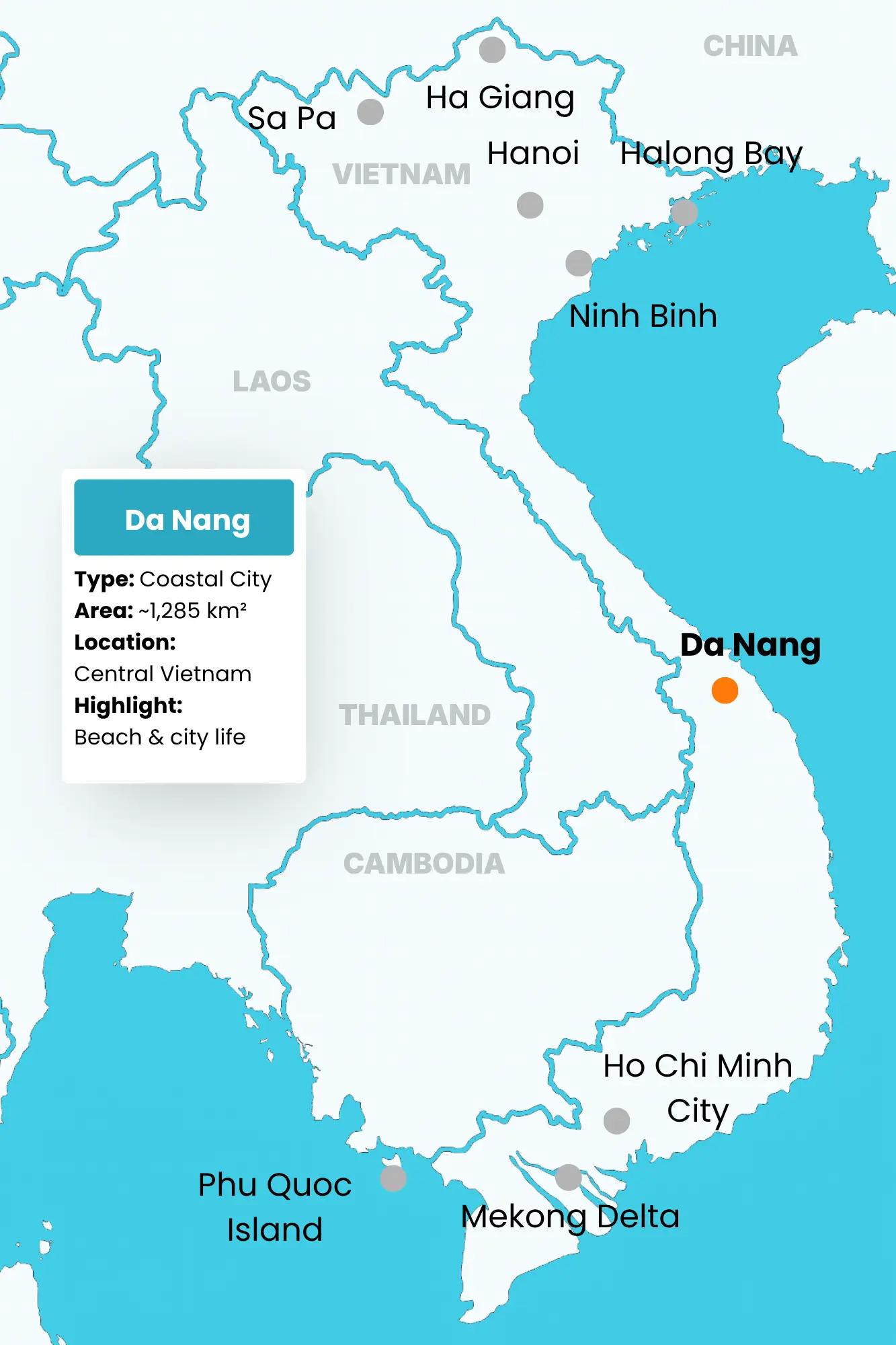
Da Nang is a major coastal city in Central Vietnam and one of the country’s important urban, economic, cultural, and transportation centers. Its location at the midpoint of Vietnam gives the city an important role in connecting the northern and southern parts of the country as well as the Central Highlands and neighboring countries through regional transport routes.
The city is surrounded by a diverse natural landscape. Mountains dominate the northern and western areas, while a coastal plain extends along the eastern side. The Han River runs through the urban center before reaching Da Nang Bay, creating the waterfront landscape that has become one of the city’s defining features.
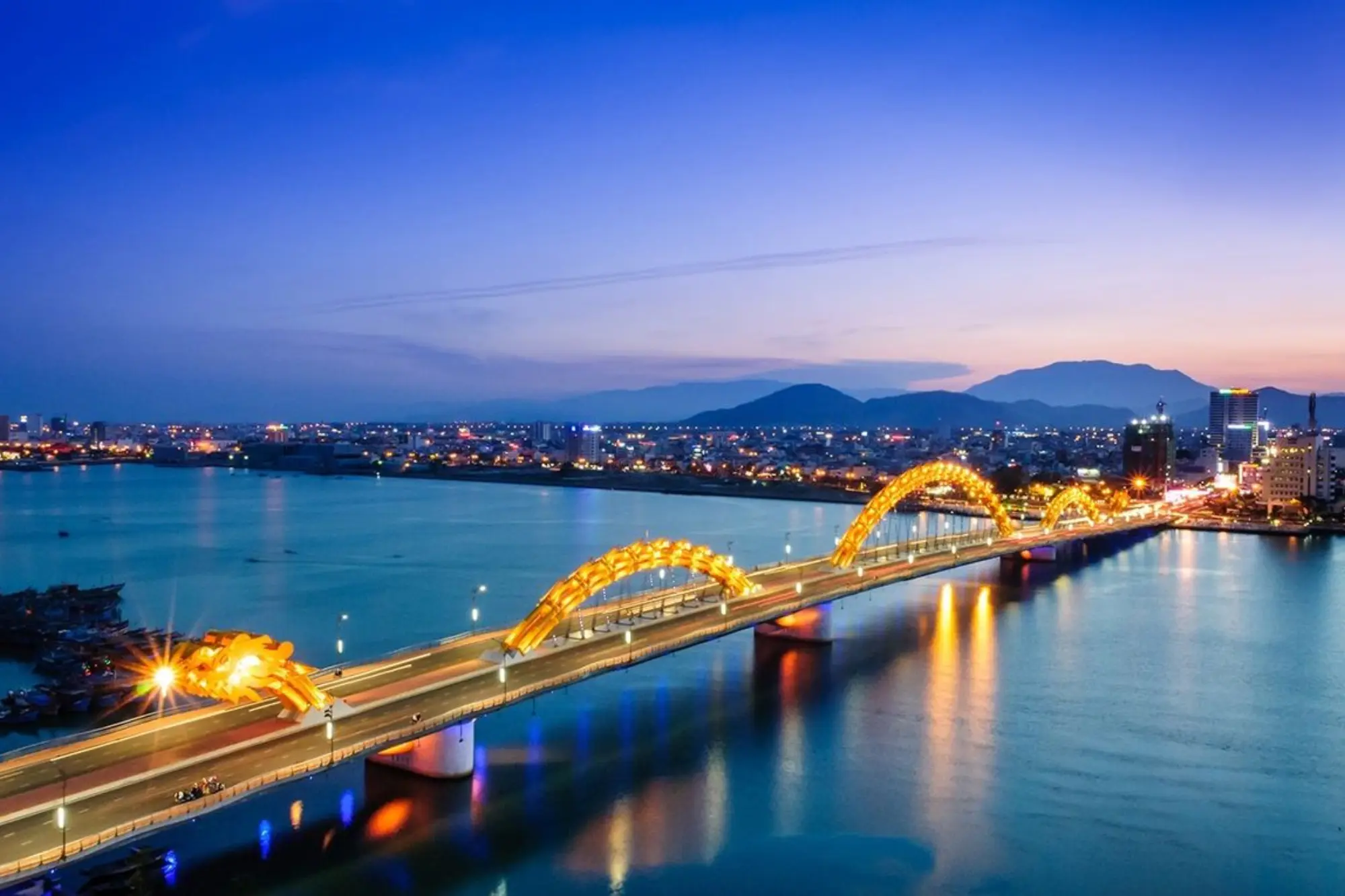
Da Nang is also known for its nickname “the city of bridges,” reflecting the numerous bridges crossing the Han River and connecting different parts of the city.
Da Nang at a Glance
- Location: Central Vietnam, along the East Sea and Han River
- Landscape: Coastline, beaches, mountains, forests, rivers, and urban areas
- Known for: My Khe Beach, Son Tra Peninsula, Marble Mountains, Ba Na Hills, Golden Bridge, Dragon Bridge, and Central Vietnamese cuisine
- Main experiences: Beach activities, sightseeing, hiking, cultural exploration, local food, photography, and city life
- Nearby destinations: Hoi An, My Son, Hue, and Hai Van Pass
- Best for: Beach holidays, families, couples, first-time visitors, and travelers exploring Central Vietnam
Da Nang’s biggest strength is the variety of experiences available in and around the city. Travelers do not need to choose between a beach destination and a cultural destination, the city offers both.
Geography of Da Nang
Da Nang has a diverse landscape where coastline, rivers, mountains, and urban areas come together, creating a destination that combines beach holidays with nature and outdoor experiences.
- Coastline: Da Nang has around 92 km of coastline, with popular beaches such as My Khe, Non Nuoc, and Nam O. The coastline is an important part of the city’s tourism identity, offering opportunities for swimming, relaxation, and water-based activities.
- Han River: The Han River flows through the city center before reaching Da Nang Bay. Its waterfront, lined with bridges, restaurants, and modern buildings, is one of the city’s most recognizable urban landscapes.
- Mountains & forests: Mountain areas surround parts of Da Nang, including Son Tra Peninsula to the northeast and the Marble Mountains to the southeast. These areas combine forests, caves, viewpoints, temples, and pagodas.
- Da Nang Bay: Located along the western side of the city, Da Nang Bay has historically supported the city’s role as a coastal port and trading center. Today, it also contributes to the city’s scenic coastal landscape.
- Central location: Da Nang is strategically located in Central Vietnam, with convenient connections to Hoi An, My Son, Hue, and Hai Van Pass. This makes the city a popular base for exploring the wider region.
History of Da Nang
Da Nang’s history has been shaped by Cham culture, Vietnamese expansion, maritime trade, and colonial development, giving the city a diverse cultural background.
- Cham heritage: The region was historically influenced by the Champa Kingdom, whose cultural legacy remains visible through Cham architecture, sculpture, and archaeological sites across Central Vietnam.
- Vietnamese expansion: From the medieval period, the area gradually became part of Đại Việt as Vietnamese settlement expanded southward. This period contributed to the development of the cultural and political landscape of Central Vietnam.
- Port & trade: Thanks to its coastal location and natural harbor, Da Nang developed into an important maritime and trading center, connecting Central Vietnam with other regions and international markets.
- French colonial period: In 1858, French and Spanish forces attacked Da Nang, marking the beginning of the French invasion of Vietnam. During the colonial period, the city was known as Tourane and developed as an important port and urban center.
- Modern Da Nang: In 1997, Da Nang became a centrally governed municipality, separate from Quang Nam Province. Since then, the city has undergone rapid development in infrastructure, tourism, and urban services, becoming one of Vietnam’s leading coastal destinations.
Best Places to Visit & Things to Do in Da Nang
Da Nang offers a combination of natural attractions, cultural landmarks, beaches, and modern city experiences. The best way to explore the destination is to combine several types of activities rather than focusing only on the beach.
1. Relax at My Khe Beach
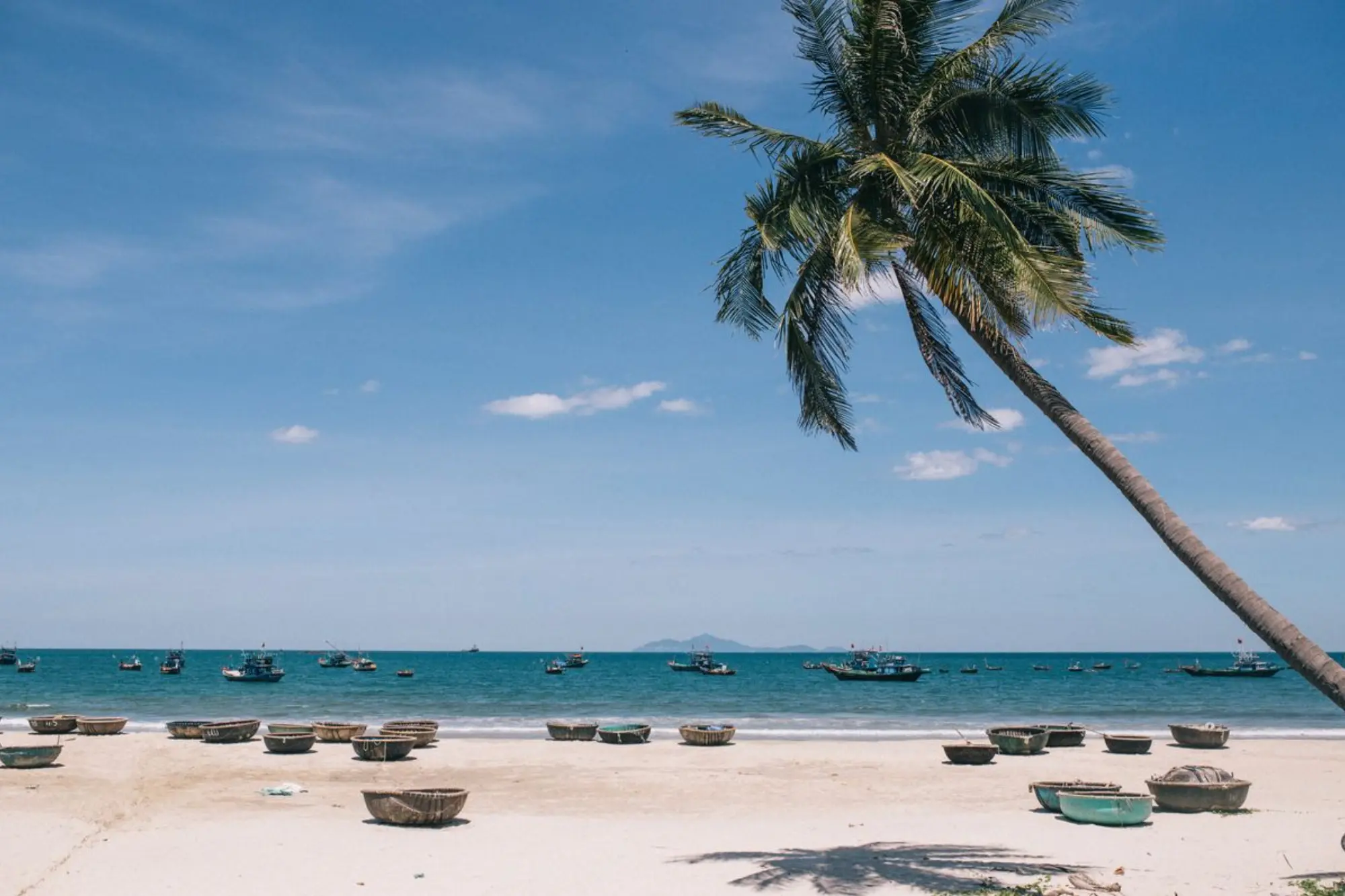
My Khe Beach is one of the most famous Da Nang beaches and a natural starting point for first-time visitors.
The beach is known for its broad sandy shoreline, coastal views, and convenient location close to the city’s main hotel and restaurant areas. It is suitable for swimming, walking, relaxing, photography, and simply enjoying Da Nang’s coastal atmosphere.
Early morning is particularly interesting for seeing local residents exercising and swimming, while late afternoon is a comfortable time to enjoy the beach before sunset.
- Best time: Early morning or late afternoon
- Duration: 1-3 hours
- Best for: Swimming, relaxing, walking, photography, and beach activities
- Highlights: Sandy coastline, sea views, sunrise, local beach life, and nearby restaurants
2. Explore Son Tra Peninsula
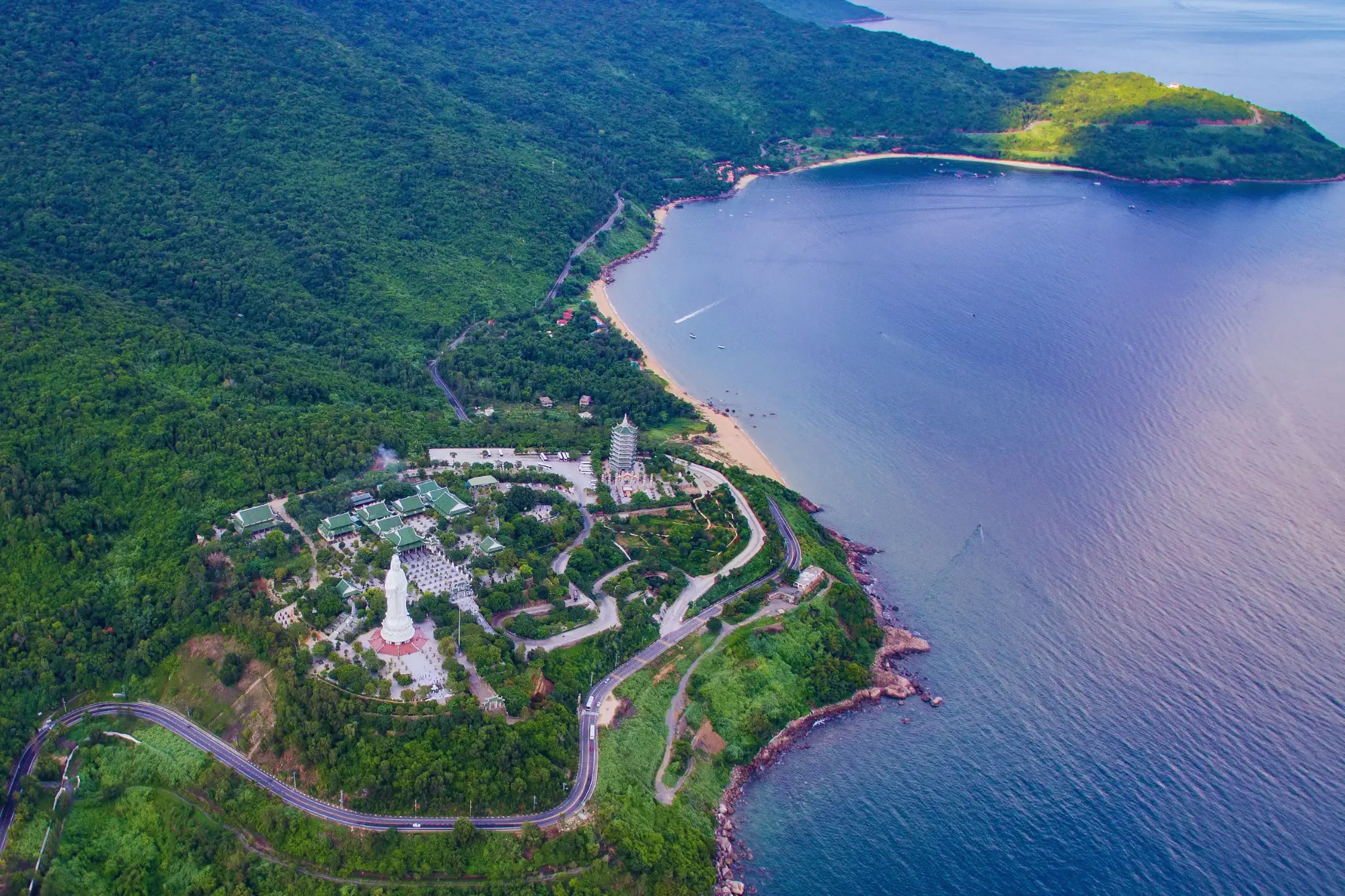
Son Tra Peninsula is one of the most important natural Da Nang attractions, combining mountains, forests, coastline, wildlife, and cultural sites. The peninsula is home to Linh Ung Pagoda and the large Lady Buddha statue overlooking the sea. Its forest ecosystem also provides habitat for the endangered red-shanked douc langur.
The road through Son Tra offers several viewpoints overlooking the coastline and Da Nang city, making the peninsula particularly attractive for photography and scenic drives.
- Location: Northeast of central Da Nang
- Duration: 2-4 hours
- Best time: Early morning or late afternoon
- Best for: Nature, photography, sightseeing, and outdoor exploration
- Highlights: Linh Ung Pagoda, Lady Buddha, coastal viewpoints, forest landscapes, and wildlife
3. Discover the Marble Mountains
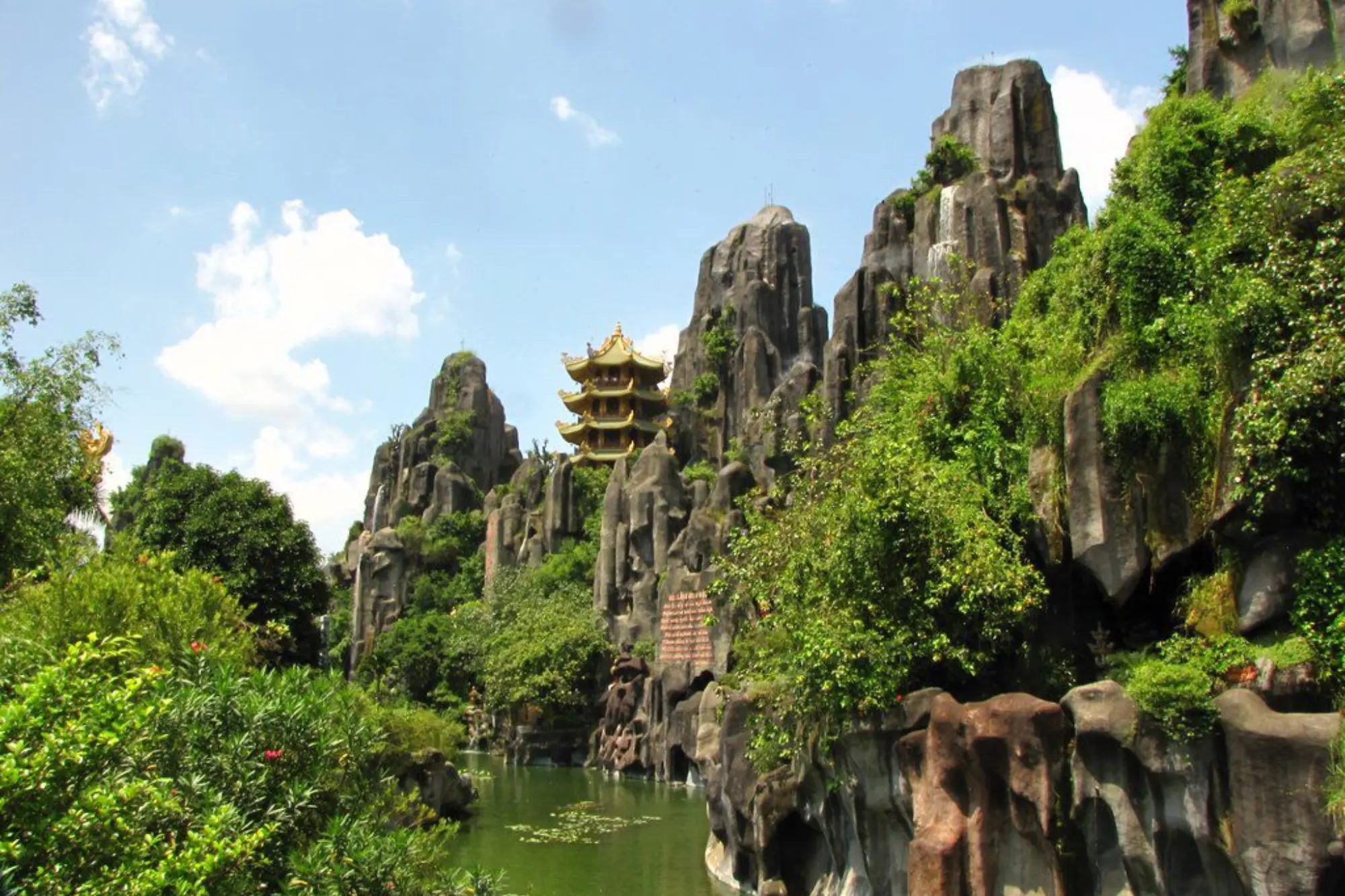
The Marble Mountains are a group of five limestone and marble hills south of central Da Nang. The mountains are traditionally associated with the five elements: Water, Wood, Metal, Fire, and Earth.
The area combines geology, spirituality, and history. Caves, Buddhist sanctuaries, pagodas, and shrines are built into and around the mountains, creating one of the most distinctive cultural landscapes in Da Nang.
Visitors can climb the stone paths, explore cave temples, visit pagodas, and enjoy views over the surrounding area.
- Duration: 2-3 hours
- Best time: Early morning or late afternoon
- Best for: Culture, history, hiking, photography, and spiritual experiences
- Highlights: Caves, pagodas, temples, viewpoints, and limestone formations
4. Visit Ba Na Hills & Golden Bridge
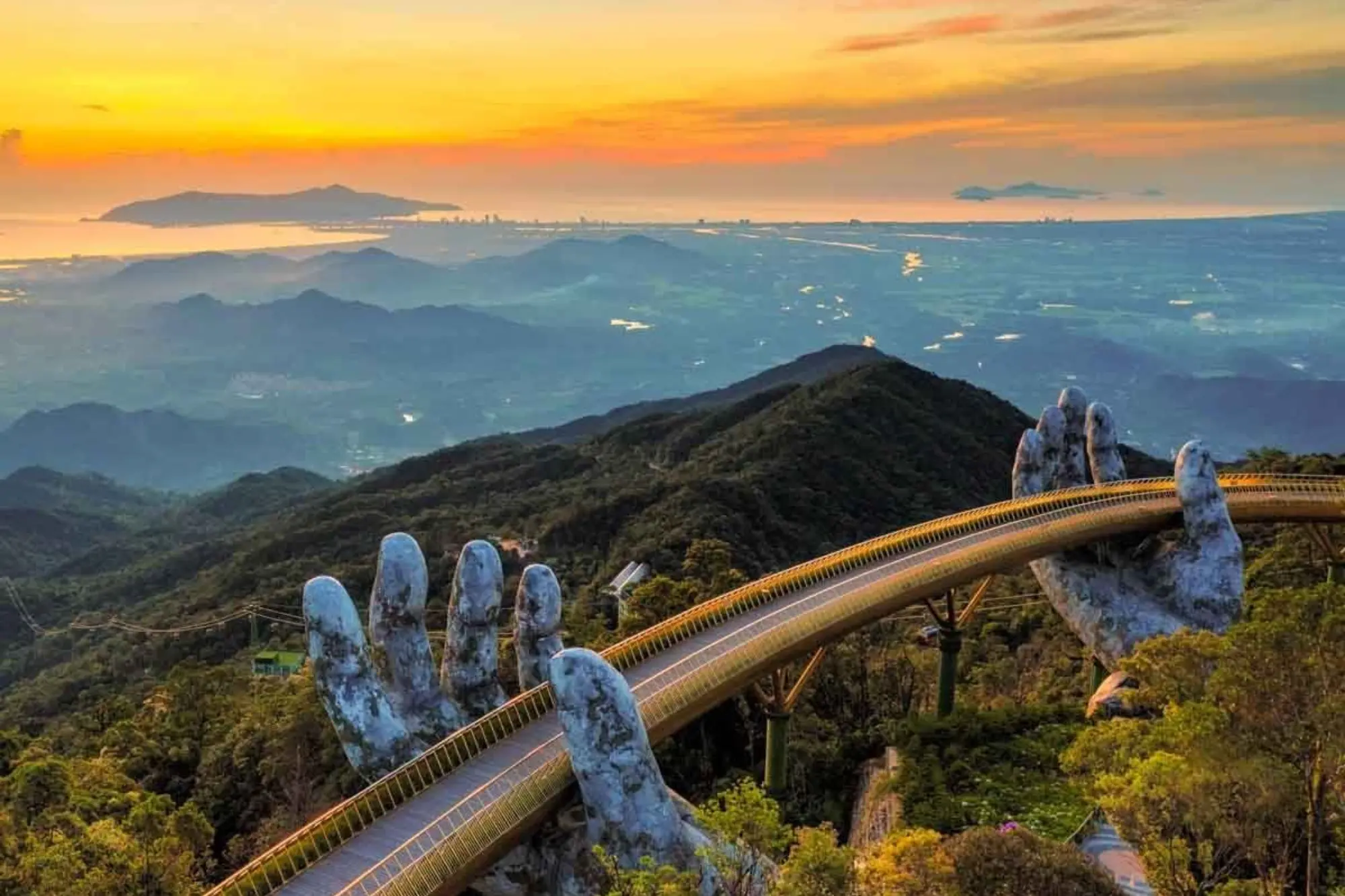
Ba Na Hills is one of the most famous places to visit in Da nang, particularly for first-time visitors. Located in the Truong Son Mountains, Ba Na Hills offers a cooler mountain environment compared with the coastal city. The destination is known for its cable car system, mountain scenery, French Village, gardens, entertainment areas, and the iconic Golden Bridge.
The Golden Bridge, with its curved walkway supported by giant stone-colored hands, became internationally recognized after opening and has become one of Vietnam’s most photographed landmarks.
- Location: West of central Da Nang
- Duration: Full day
- Best for: Families, photography, sightseeing, and entertainment
- Highlights: Golden Bridge, cable cars, French Village, gardens, mountain views, and entertainment facilities
5. See Dragon Bridge & the Han River
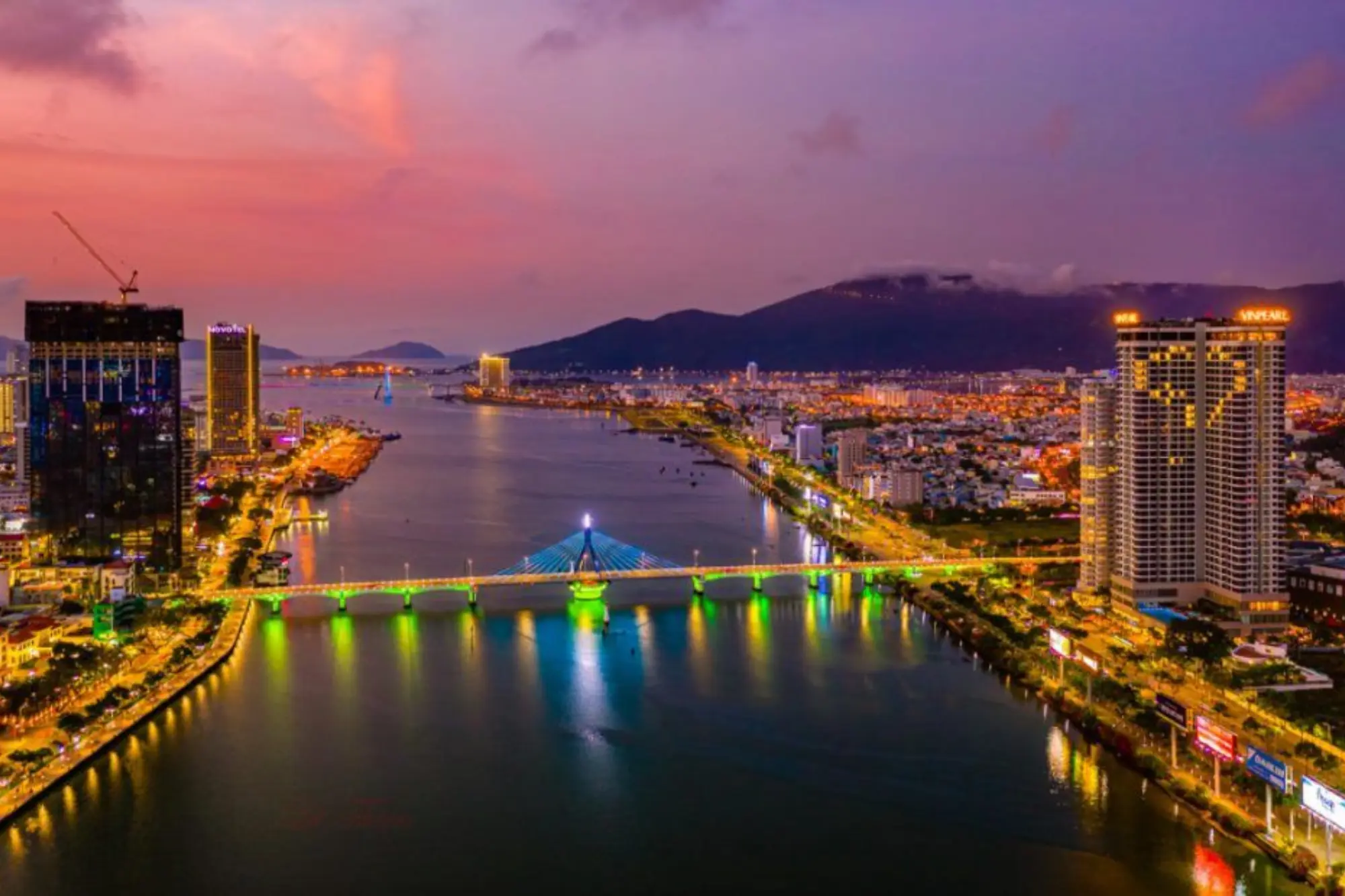
Dragon Bridge is one of the symbols of modern Da Nang and a key part of the city’s identity as the “city of bridges.”
The bridge crosses the Han River and is particularly impressive after sunset when it is illuminated. The surrounding riverfront offers a pleasant setting for an evening walk, photography, dining, and enjoying Da Nang’s nightlife.
On weekend evenings, the Dragon Bridge is also known for its fire and water performance, making it one of the city’s popular nighttime attractions.
- Best time: Evening
- Duration: 1-2 hours
- Best for: Night sightseeing, photography, couples, and families
- Highlights: Dragon Bridge, Han River, city lights, riverfront, and weekend show
6. Visit Linh Ung Pagoda
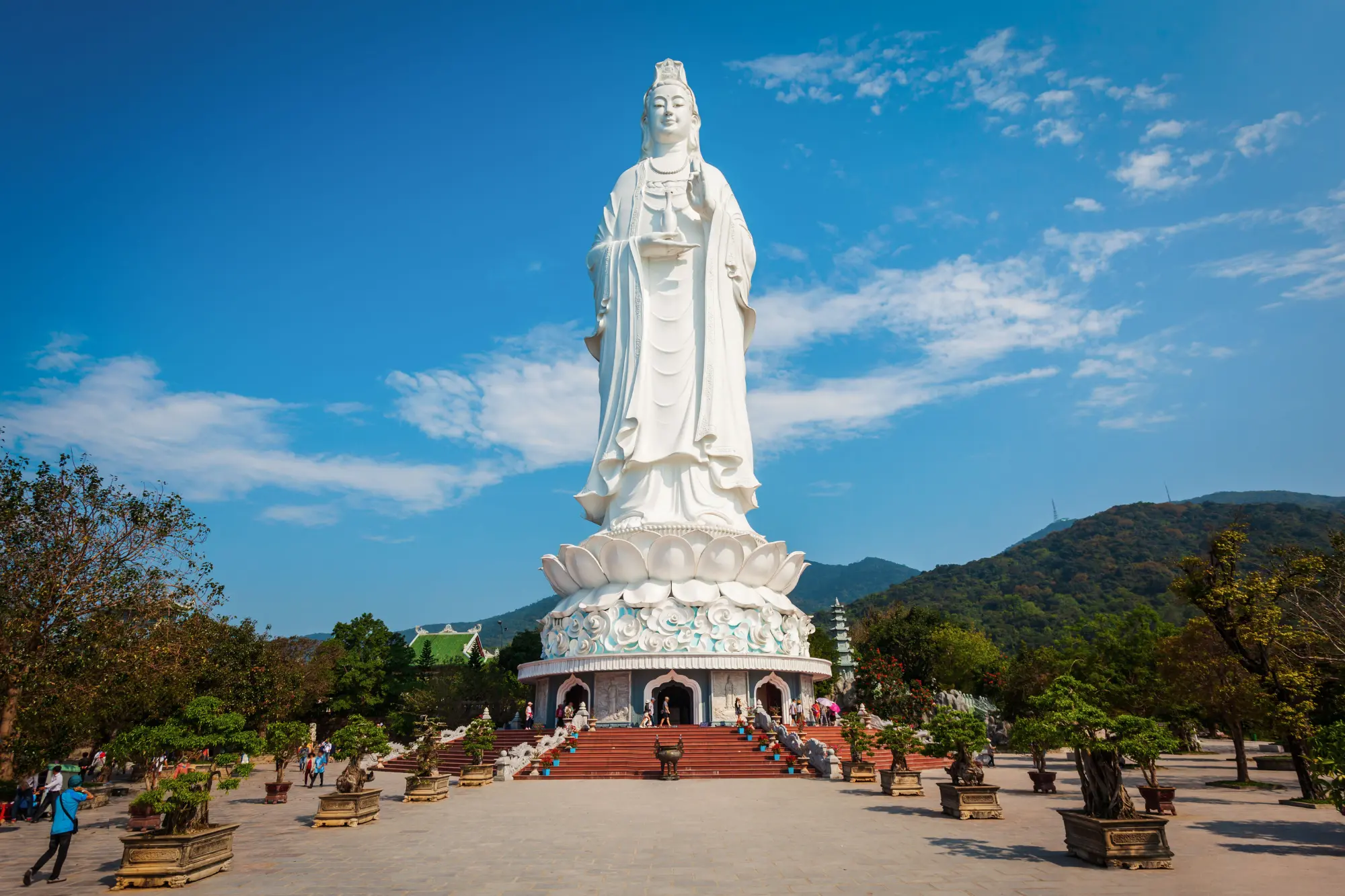
Linh Ung Pagoda on Son Tra Peninsula is one of Da Nang’s best-known religious landmarks.
The pagoda is particularly recognizable for its large Lady Buddha statue, which overlooks the sea and the city. The elevated location also provides wide views over Da Nang Bay and the coastline. The site combines religious significance with natural scenery, making it a useful stop when exploring Son Tra Peninsula.
- Location: Son Tra Peninsula
- Duration: 1-2 hours
- Best for: Culture, photography, sightseeing, and panoramic views
- Highlights: Lady Buddha statue, Buddhist architecture, sea views, and mountain scenery
7. Take a Scenic Trip Along Hai Van Pass
Hai Van Pass is a spectacular mountain route between Da Nang and Hue and one of the most scenic landscapes in Central Vietnam.
The pass crosses the Truong Son Mountains between the coast and inland areas, offering panoramic views of mountains, forests, and the sea. For travelers who want to experience more than the city itself, a trip along Hai Van Pass can be combined with a longer journey toward Hue.
- Best for: Scenic drives, photography, mountains, and coastal views
- Duration: Half day or longer
- Highlights: Mountain roads, coastal viewpoints, forests, and panoramic scenery
8. Explore Da Nang’s Local Food & Markets
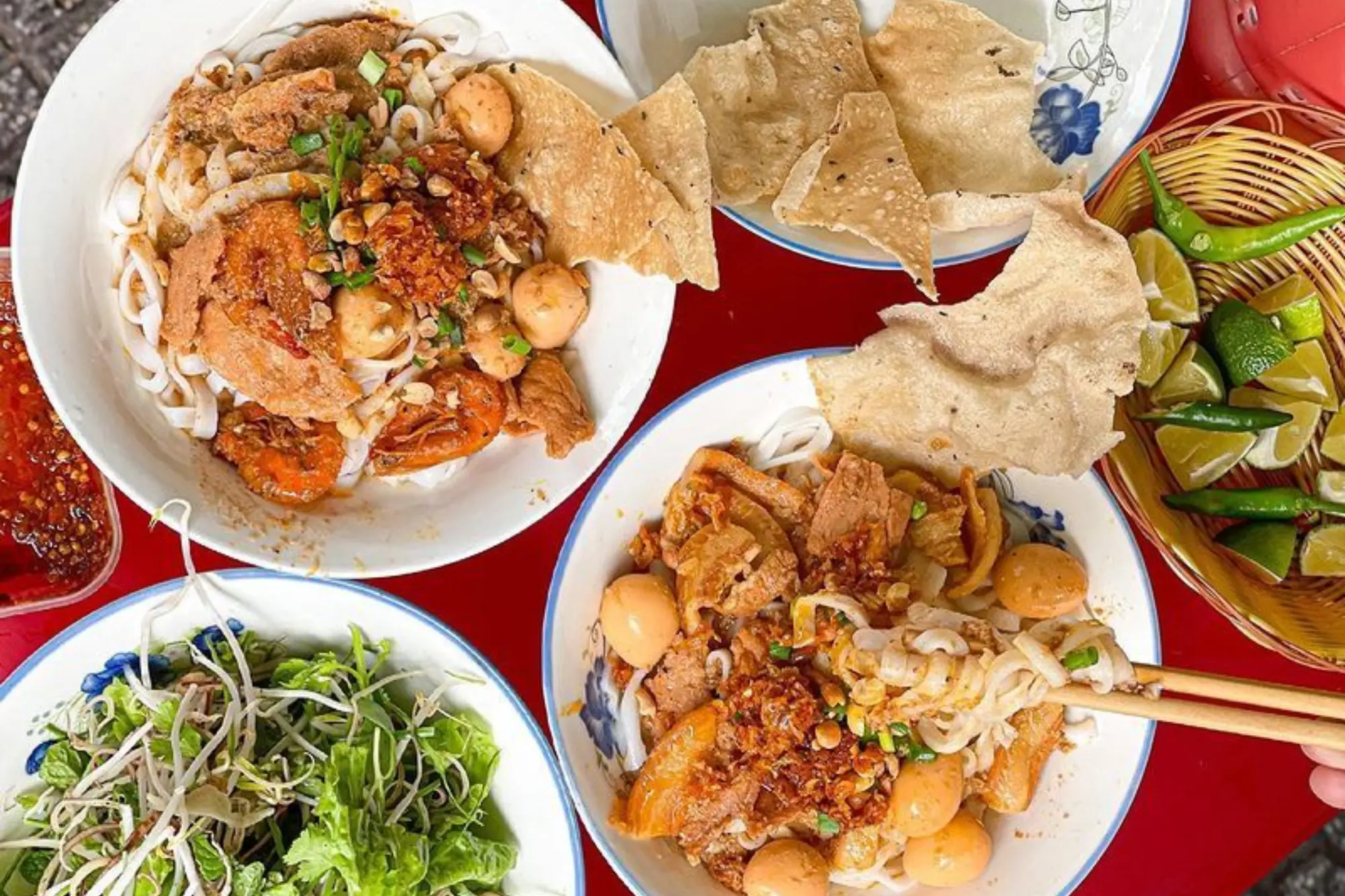
One of the must do in Da Nang experiences is exploring the city through its food. Da Nang is part of Central Vietnam’s distinctive culinary region, known for bold flavors, fresh seafood, noodles, rice-based dishes, and flavorful sauces.
Some local specialties to try include:
- Mi Quang: Turmeric-colored rice noodles served with herbs, meat or seafood, peanuts, and a small amount of flavorful broth.
- Banh Xeo: Crispy Vietnamese savory pancakes commonly served with fresh herbs and dipping sauce.
- Fresh seafood: A wide selection of seafood is available along the coastal areas.
- Bun Cha Ca: Fish cake noodle soup that is particularly associated with Central Vietnam.
- Nem Lui: Grilled pork skewers served with herbs and dipping sauce.
Traditional markets and local eateries are also useful places to experience everyday life and discover dishes beyond the city’s major tourist attractions.
9. Experience Da Nang at Night
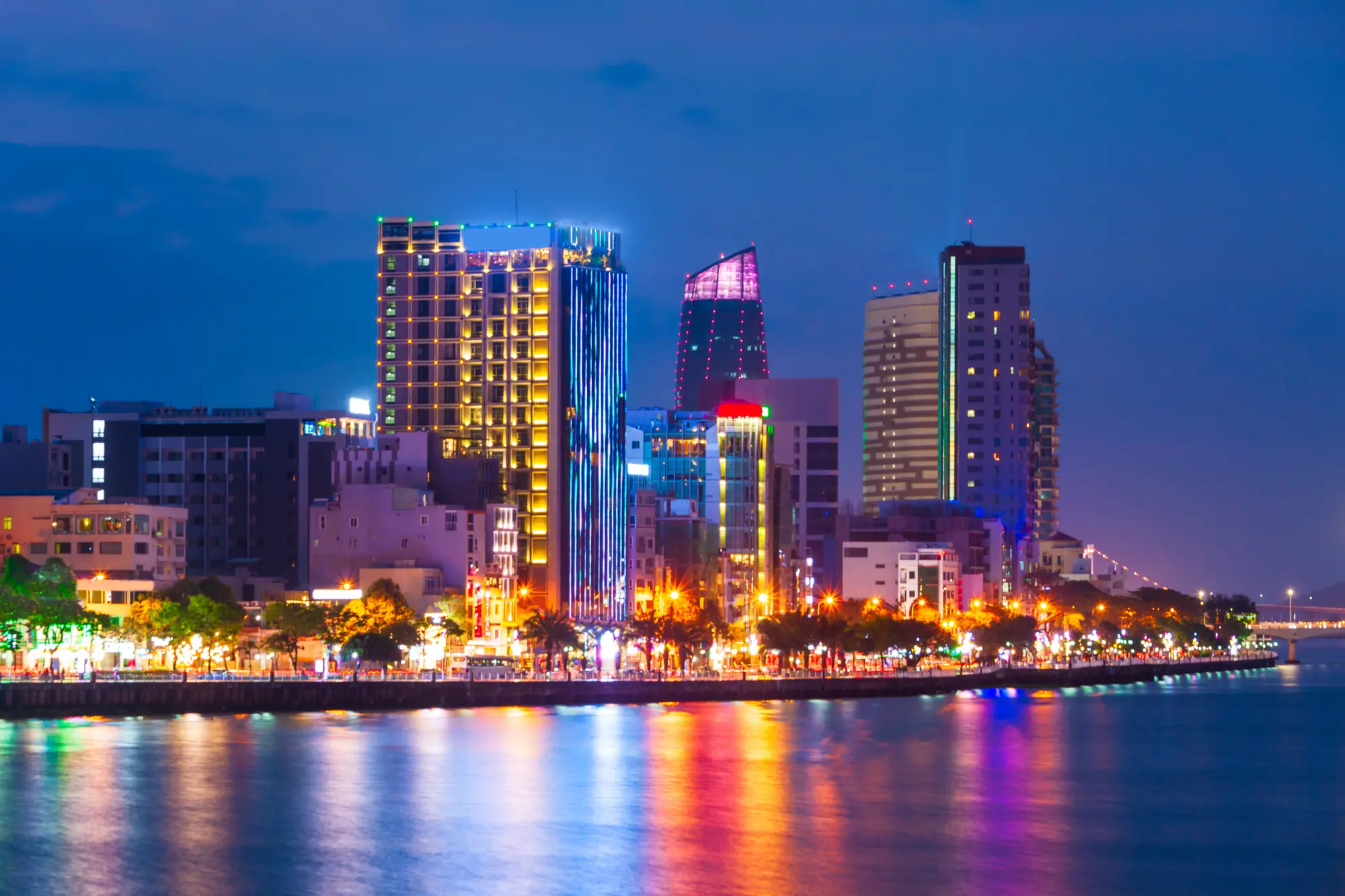
Da Nang takes on a different atmosphere after sunset. The Han River becomes the center of evening activity, with illuminated bridges, riverside walks, cafes, restaurants, and city lights. Visitors can combine Dragon Bridge with a walk along the river or explore the surrounding streets for food and drinks.
For travelers interested in the city rather than only its natural attractions, spending an evening around the Han River is one of the simplest ways to experience modern Da Nang.
Culture, Festivals & Local Life
Da Nang’s identity is shaped not only by its landscape but also by its cultural traditions and growing reputation as a modern event destination.
The city hosts several major tourism and cultural events throughout the year. The Da Nang International Fireworks Festival is among its best-known events and has been held since 2008. Other recurring events have included the Da Nang International Marathon, IRONMAN 70.3 Vietnam, and summer tourism programs.
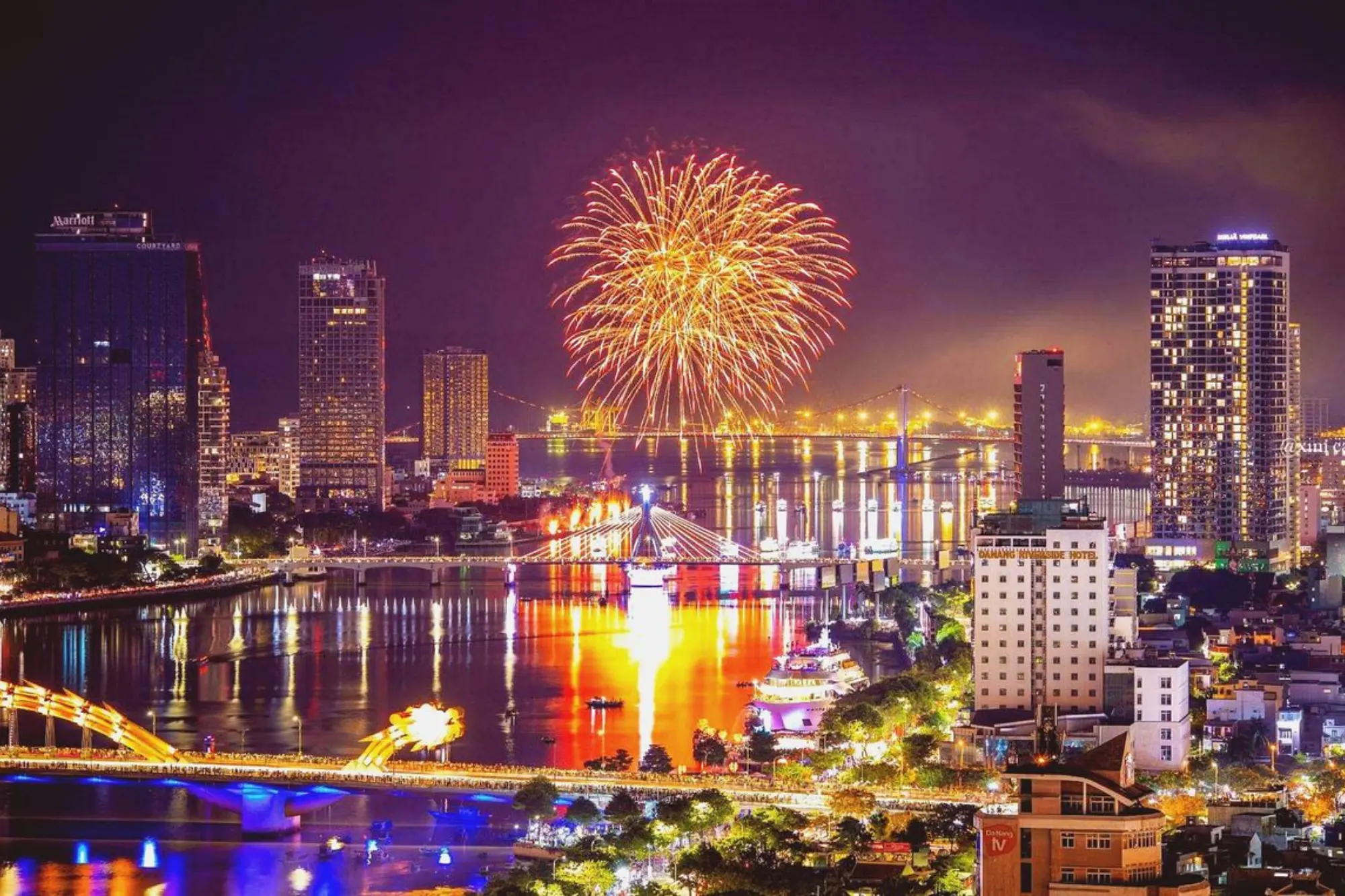
Religious sites, traditional markets, local food, and neighborhood life provide a quieter side of the city. Visitors can also explore museums and cultural institutions to learn more about the region’s Cham heritage and historical development.
This combination of modern festivals and traditional culture contributes to Da Nang’s character as both a contemporary coastal city and an important cultural destination.
Best Time to Visit Da Nang
Da Nang has a tropical monsoon climate, with warm temperatures throughout the year and a distinct rainy period. The best months to visit are March to May, when the weather is warm and generally favorable for sightseeing and outdoor activities.
|
Period |
Weather |
Best For |
| January-February | Cooler, with occasional rain | City sightseeing, cultural attractions |
| March-May | Warm, relatively dry, comfortable | Best overall: beaches, sightseeing & outdoor activities |
| June-August | Hot, with relatively little rain and calm seas | Beach holidays, swimming & resorts |
| September-October | Warm, with increasing rainfall | Sightseeing, flexible itineraries |
| November-December | Wetter, with more frequent and prolonged rain | Indoor attractions & flexible trips |
Da Nang Travel Tips
- Start outdoor activities early: Morning temperatures are generally more comfortable, especially during summer.
- Plan attractions by location: Group nearby attractions together to reduce travel time.
- Allow a full day for Ba Na Hills: The mountain resort has enough attractions to require more than a quick visit.
- Check the weather: Rain can affect mountain viewpoints, beach activities, and scenic trips.
- Bring sun protection: Sunscreen, sunglasses, a hat, and light clothing are useful for beach and outdoor activities.
- Wear comfortable footwear: Marble Mountains and Son Tra involve walking and uneven surfaces.
- Try local food: Explore traditional markets and local restaurants rather than relying only on tourist-oriented dining.
- Respect religious sites: Dress appropriately and follow local customs when visiting pagodas and temples.
- Combine Da Nang with nearby destinations: Hoi An, My Son, and Hue can easily complement a Da Nang itinerary.
Frequently Asked Questions About Da Nang
1. Is Da Nang worth visiting?
Yes. Da Nang offers a combination of beaches, mountains, cultural attractions, local food, and modern city experiences. Its central location also makes it convenient for exploring other destinations in Central Vietnam.
2. How many days do you need in Da Nang?
A 3-day, 2-night trip is enough to cover many of the main Da Nang attractions, including My Khe Beach, Son Tra Peninsula, Marble Mountains, Dragon Bridge, and the city center. A 4-5 day trip allows more time for Ba Na Hills, Hoi An, Hai Van Pass, and a slower beach holiday.
3. What are the best places to visit in Da Nang?
The best places to visit in Da Nang include My Khe Beach, Son Tra Peninsula, Linh Ung Pagoda, Marble Mountains, Ba Na Hills, Golden Bridge, Dragon Bridge, and the Han River. Travelers with more time can also explore Hai Van Pass and nearby Hoi An and My Son.
4. How much does a trip to Da Nang cost?
For a 3-day, 2-night trip, a mid-range traveler can generally budget around US$50-100 per person per day, excluding international flights. The total cost depends mainly on accommodation, dining, transportation, and paid attractions.
Budget travelers can spend less by choosing local restaurants and affordable accommodation, while resorts, private transportation, guided tours, and attractions such as Ba Na Hills can increase the overall budget.
5. Can you visit Da Nang and Hoi An on the same trip?
Yes. Da Nang and Hoi An are commonly combined in Central Vietnam itineraries. Da Nang provides beaches, mountains, and urban attractions, while Hoi An offers a historic old town and a different cultural atmosphere.
6. Is Da Nang suitable for families?
Yes. Da Nang offers a variety of family-friendly experiences, including beaches, sightseeing, cable-car rides, cultural attractions, and spacious resorts. Families can also combine the city with nearby Hoi An for a broader Central Vietnam trip.
Conclusion
Da Nang is a diverse destination where beaches, mountains, cultural heritage, and modern city life come together. From the sandy shores of My Khe Beach and the natural landscapes of Son Tra Peninsula to the Marble Mountains, Golden Bridge, and Dragon Bridge, the city offers a wide range of experiences for travelers.
With its convenient location and easy access to Hoi An, My Son, Hue, and Hai Van Pass, Da Nang is also an excellent base for exploring Central Vietnam. Whether you are looking for a relaxing beach holiday, outdoor adventures, cultural experiences, or local food, Da Nang offers plenty to discover in a single trip.
Explore Nicetrips’ Vietnam packages Tours for thoughtfully designed journeys that combine Vietnam’s highlights with authentic local experiences. You can also explore the Nicetrips blog for more destination guides, travel inspiration, and practical tips for planning your Vietnam adventure.