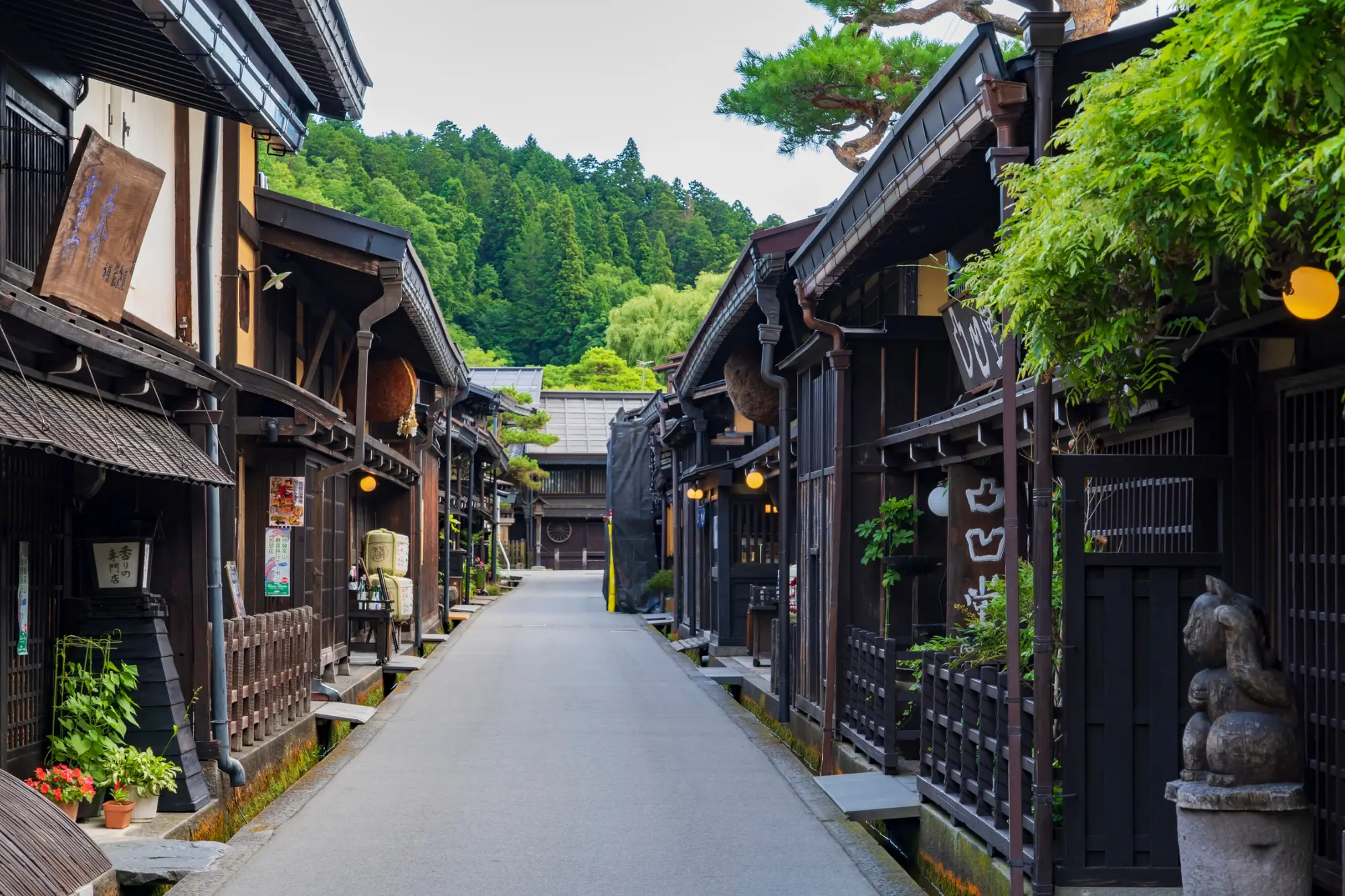
Takayama is a historic mountain city in Gifu Prefecture, Central Japan, known for its traditional streets, wooden townhouses, local markets, festivals, and strong connection with Hida’s mountain culture. Surrounded by the Japanese Alps, the city offers a slower and more traditional atmosphere compared with larger destinations such as Tokyo, Kyoto, and Osaka. Whether you are looking for the best things to do in Takayama, planning a visit to Hida Folk Village Takayama, or exploring the city’s historic center, this guide covers the main attractions, culture, food, transportation, and travel tips.
About Takayama
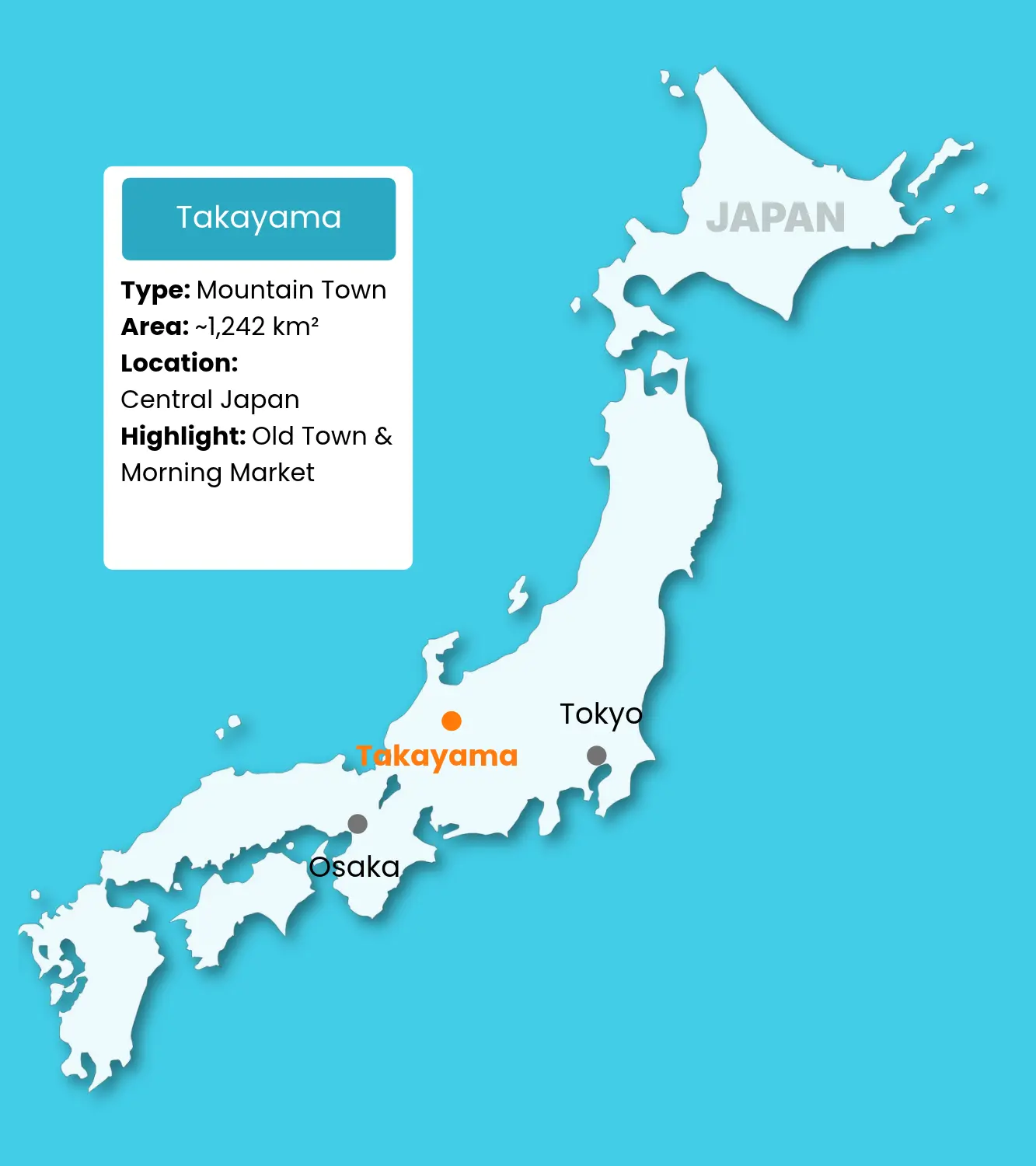
Takayama is a small historic city in the mountainous Hida region of Gifu Prefecture. Its location among the mountains has helped preserve a distinctive local culture, architecture, and way of life.
The city developed as a commercial and administrative center during the Edo period. Today, its traditional townscape, historic buildings, morning markets, and festivals make it one of the most interesting destinations for travelers exploring the Japanese Alps.
Takayama is also known for Hida beef, traditional woodworking, sake breweries, and the Takayama Festival, one of Japan’s best-known traditional festivals.
Takayama at a Glance
- Location: Hida region, Gifu Prefecture, Central Japan
- Area: Approximately 2,177 km²
- Landscape: Mountains, forests, rivers, and traditional town areas
- Known for: Old Town, Hida Folk Village, Takayama Morning Market, Takayama Festival, and Hida beef
- Main attractions: Sanmachi Suji, Takayama Jinya, Miyagawa Morning Market, Hida Folk Village, and Sakurayama Hachimangu Shrine
- Best for: History, traditional culture, food, nature, photography, and slower travel
- Nearby destinations: Shirakawa-go, Gero Onsen, Matsumoto, and the Japanese Alps
Geography of Takayama
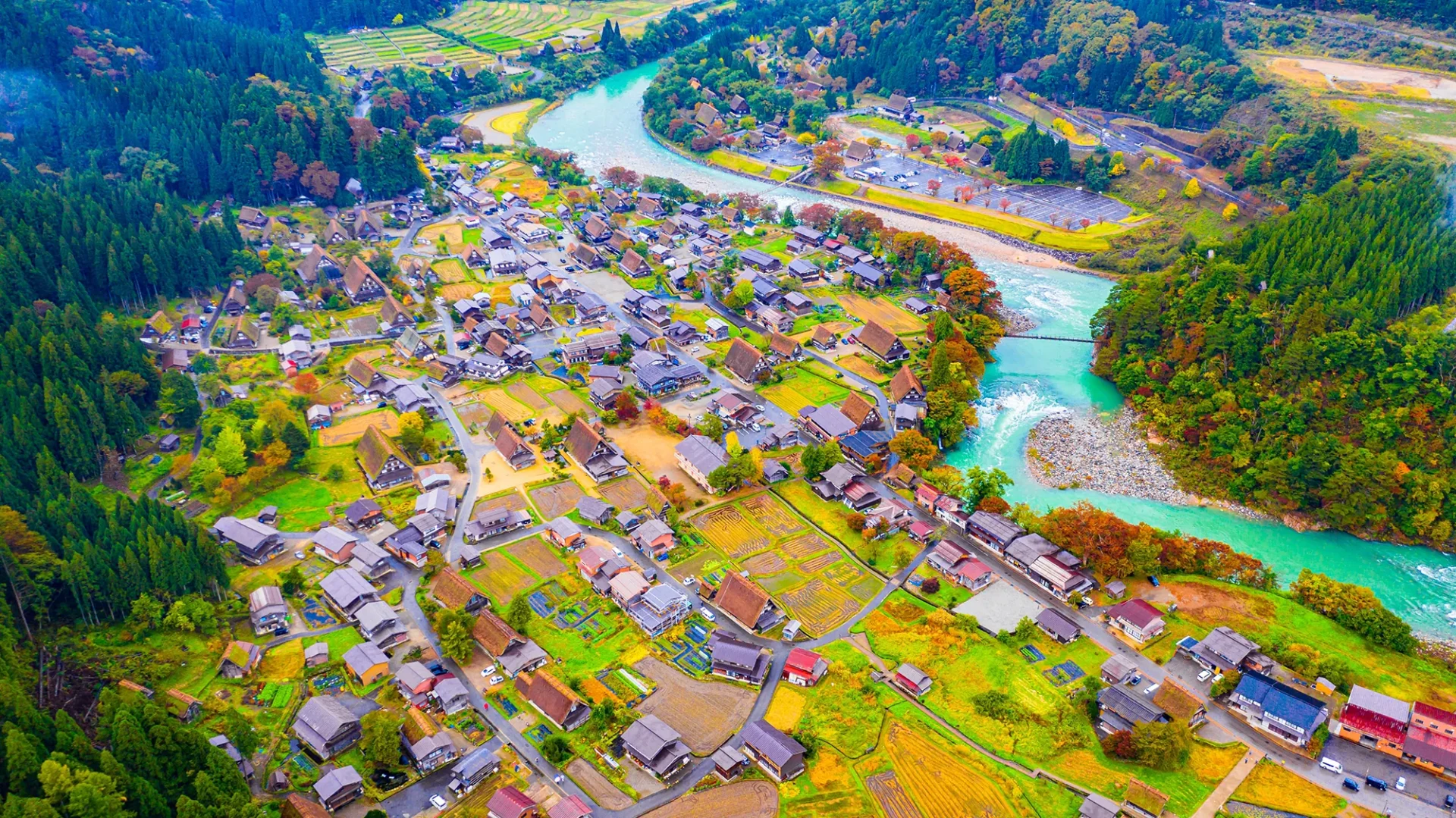
Takayama is located roughly in the center of the Japanese archipelago and is surrounded by mountains, including peaks reaching around 3,000 meters. The mountainous landscape has played an important role in shaping the region’s culture and economy.
The city center is relatively compact, making many of the main Takayama attractions accessible on foot. The Miyagawa River runs through the historic center, while mountain areas and rural villages extend beyond the urban core.
Takayama is also part of the wider Hida region, which is known for its forests, traditional wooden architecture, agricultural products, and Hida beef.
History of Takayama
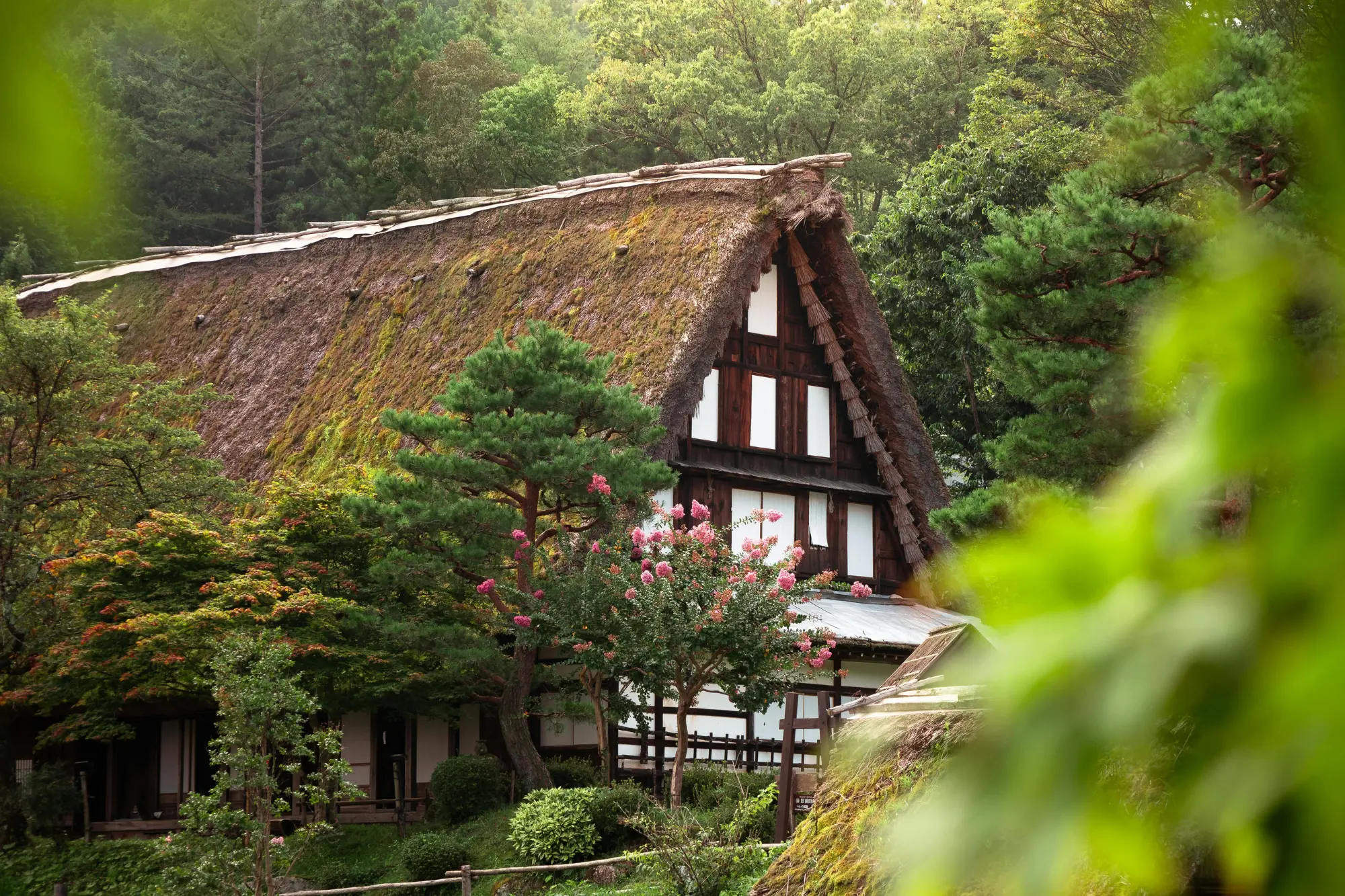
Takayama’s history is closely connected with the mountains and forests of Hida. The region developed a strong woodworking tradition, and skilled craftsmen known as Hida no Takumi became well known for their knowledge of timber and traditional construction.
From Castle Town to Commercial Center
- In 1585, Kanamori Nagachika became the ruler of Hida and built a castle in the area now known as Shiroyama Park. A town developed around the castle for samurai, merchants, and craftsmen.
- In 1692, Hida came under the direct control of the Edo Shogunate. Takayama continued to develop as an important commercial center, with roads connecting the town to surrounding regions.
This history can still be seen in the city’s traditional townhouses, historic government buildings, temples, and preserved streets.
Takayama Today
Takayama City was established in 1936, and its administrative area expanded significantly through later municipal mergers. Today, the city combines its historic center with extensive mountain and rural areas.
Its preserved architecture and traditional festivals have made Takayama an important cultural destination in Central Japan.
Culture & Local Life in Takayama
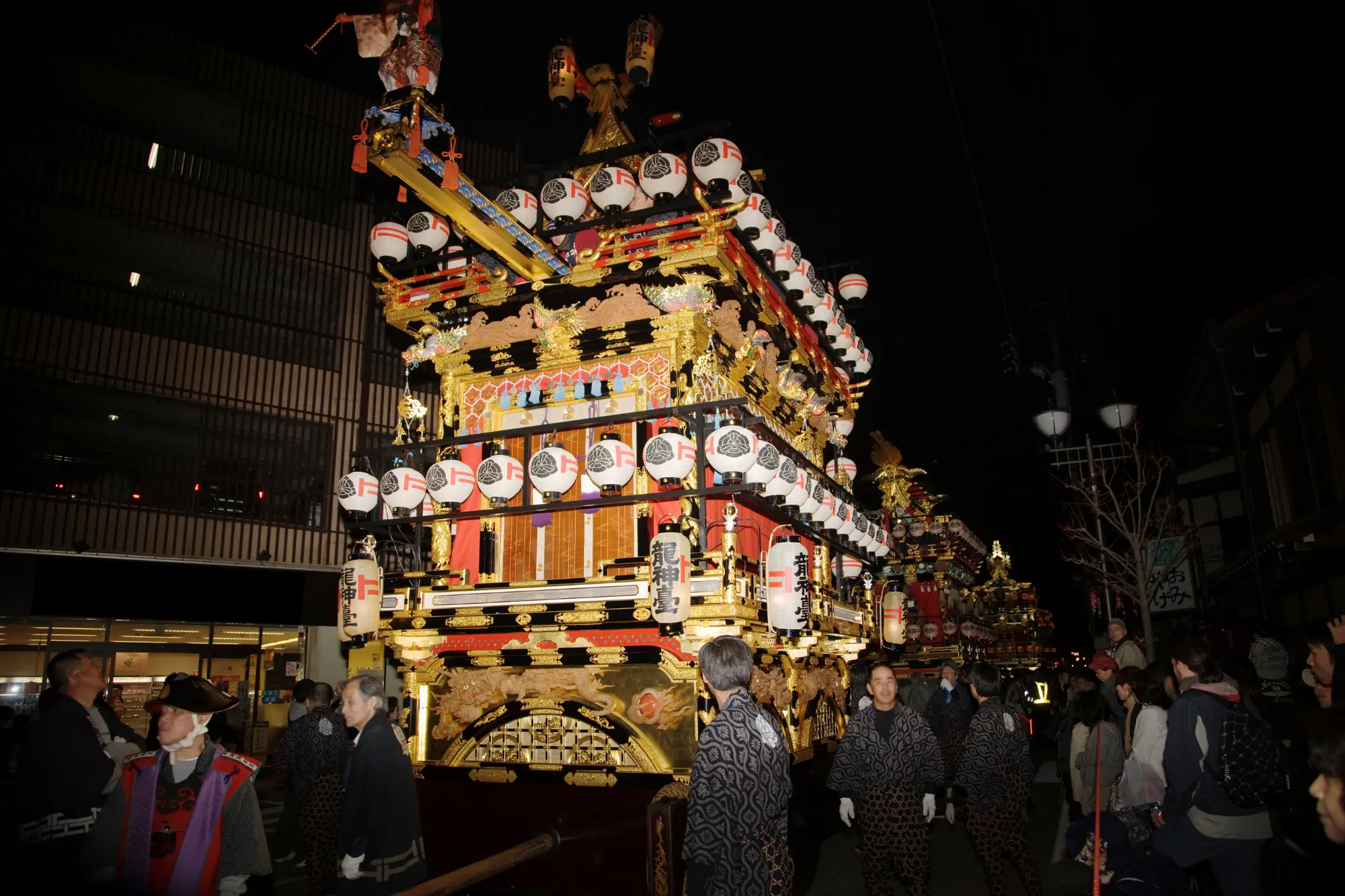
Takayama’s culture is strongly influenced by its mountain environment, woodworking traditions, agricultural communities, and history as a merchant town.
- Traditional Architecture
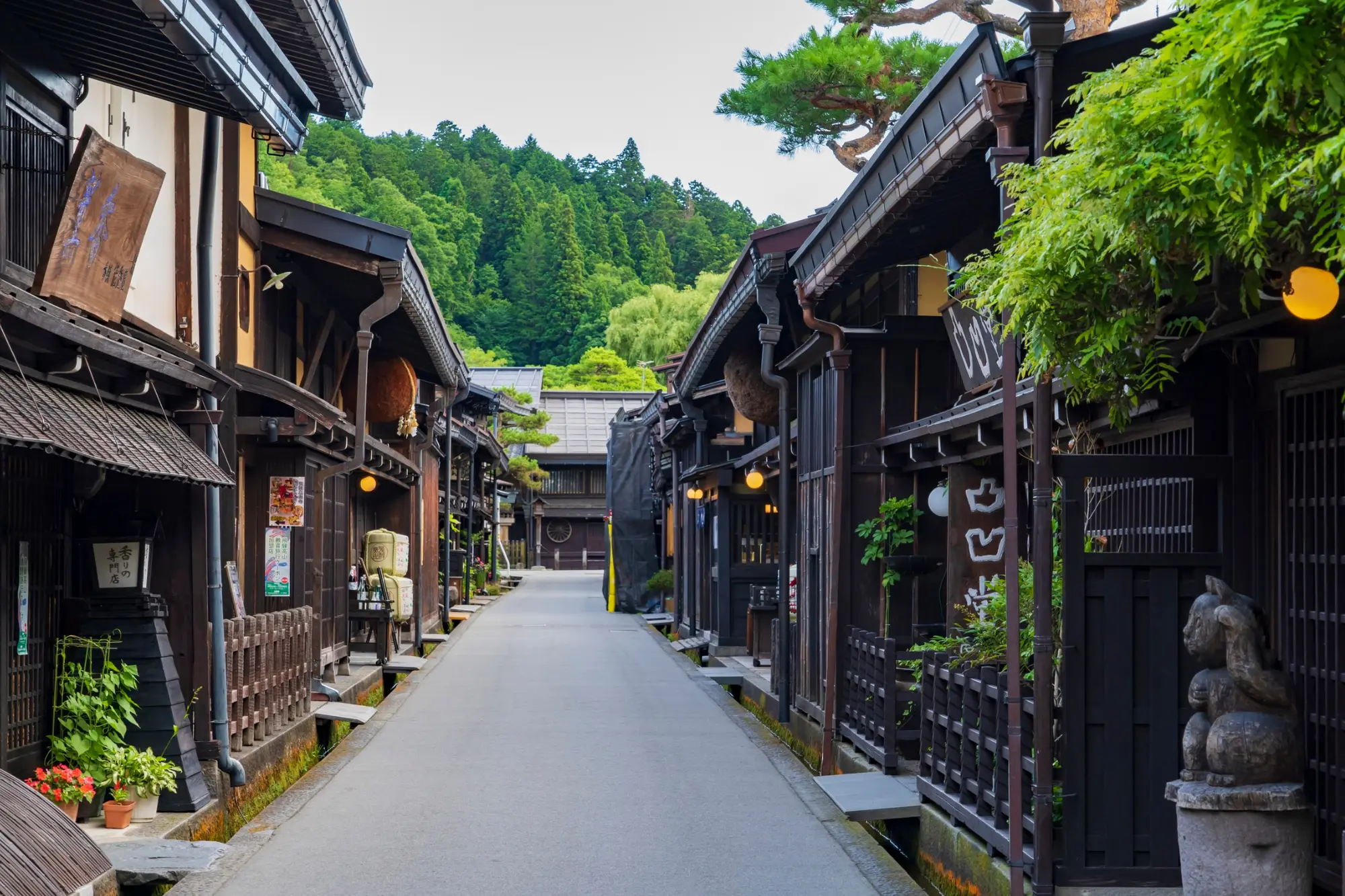
The Sanmachi Traditional Buildings Preservation Area is characterized by wooden townhouses, latticework, clear water channels, sake breweries, restaurants, and traditional shops. Many of the buildings date from the Edo period and later.
- Hida Craftsmanship
Woodworking remains an important part of the region’s cultural identity. Traditional crafts include woodworking, lacquerware, weaving, dyeing, and other handmade products.
- Takayama Festival
The Takayama Festival takes place twice a year, in spring and autumn. The event is famous for its elaborately decorated festival floats, traditional performances, and historic atmosphere.
- Local Food Culture
Food is another important part of life in Takayama. Hida beef, Hoba miso, Takayama ramen, pickles, and local sake are among the specialties visitors can discover throughout the city.
Where to Stay in Takayama
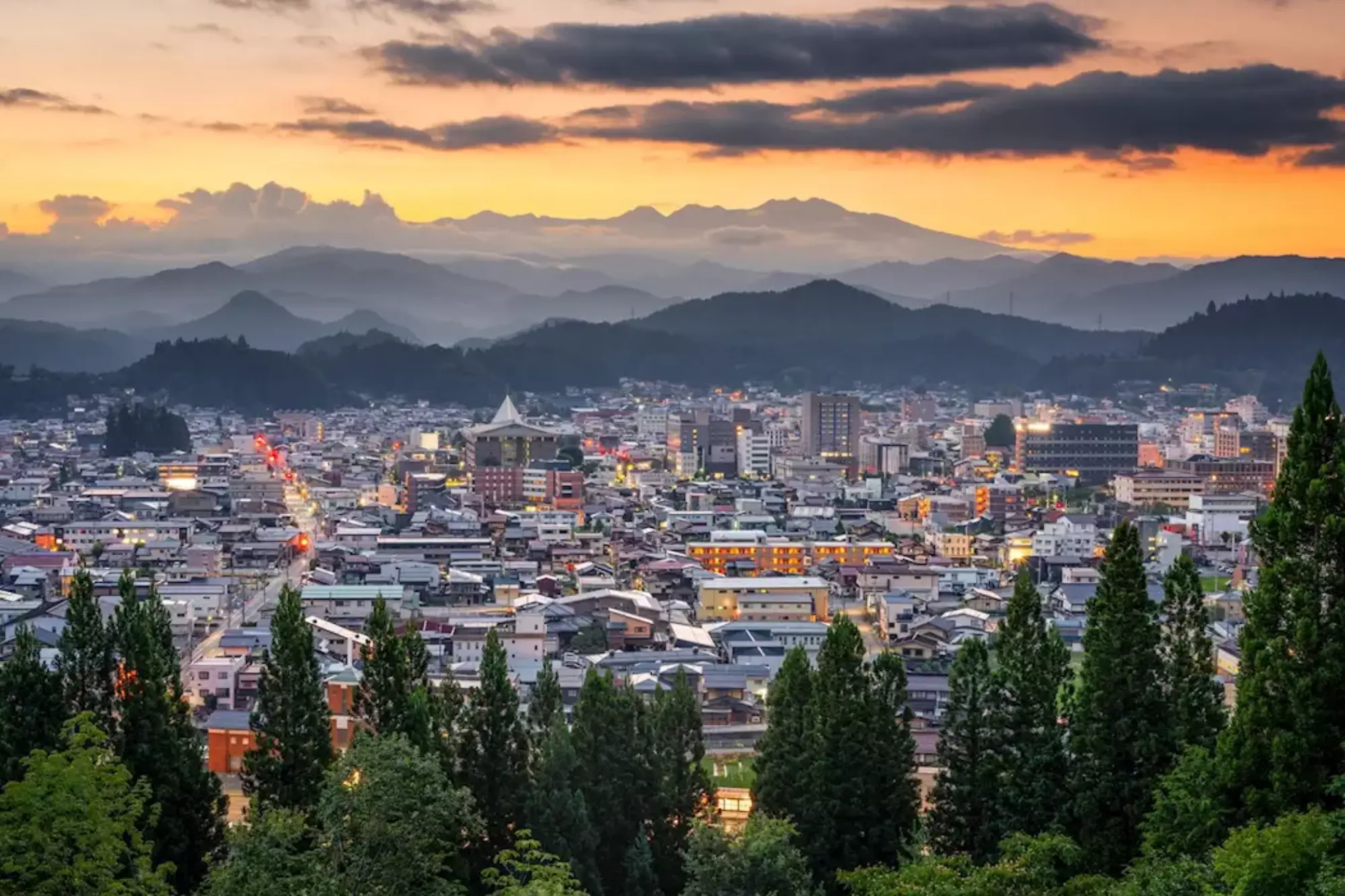
Takayama is relatively compact, and staying near the station or historic center makes sightseeing convenient.
- Takayama Station Area: Best for first-time visitors and travelers using trains or buses. It offers easy access to the Nohi Bus Center, restaurants, and the city center.
- Sanmachi & Old Town: Suitable for travelers who want to stay close to traditional streets, restaurants, shops, and major historical attractions.
- Miyagawa River Area: A good option for travelers looking for a quieter atmosphere while remaining within walking distance of the morning market and Old Town.
- Hida Folk Village Area: Better suited to travelers who prefer a quieter setting and easy access to the village and surrounding countryside.
Best Places to Visit & Things to Do in Takayama
Takayama’s main attractions are concentrated around the historic center, while Hida Folk Village and other mountain destinations are a short bus ride away.
1. Explore Sanmachi Suji Old Town
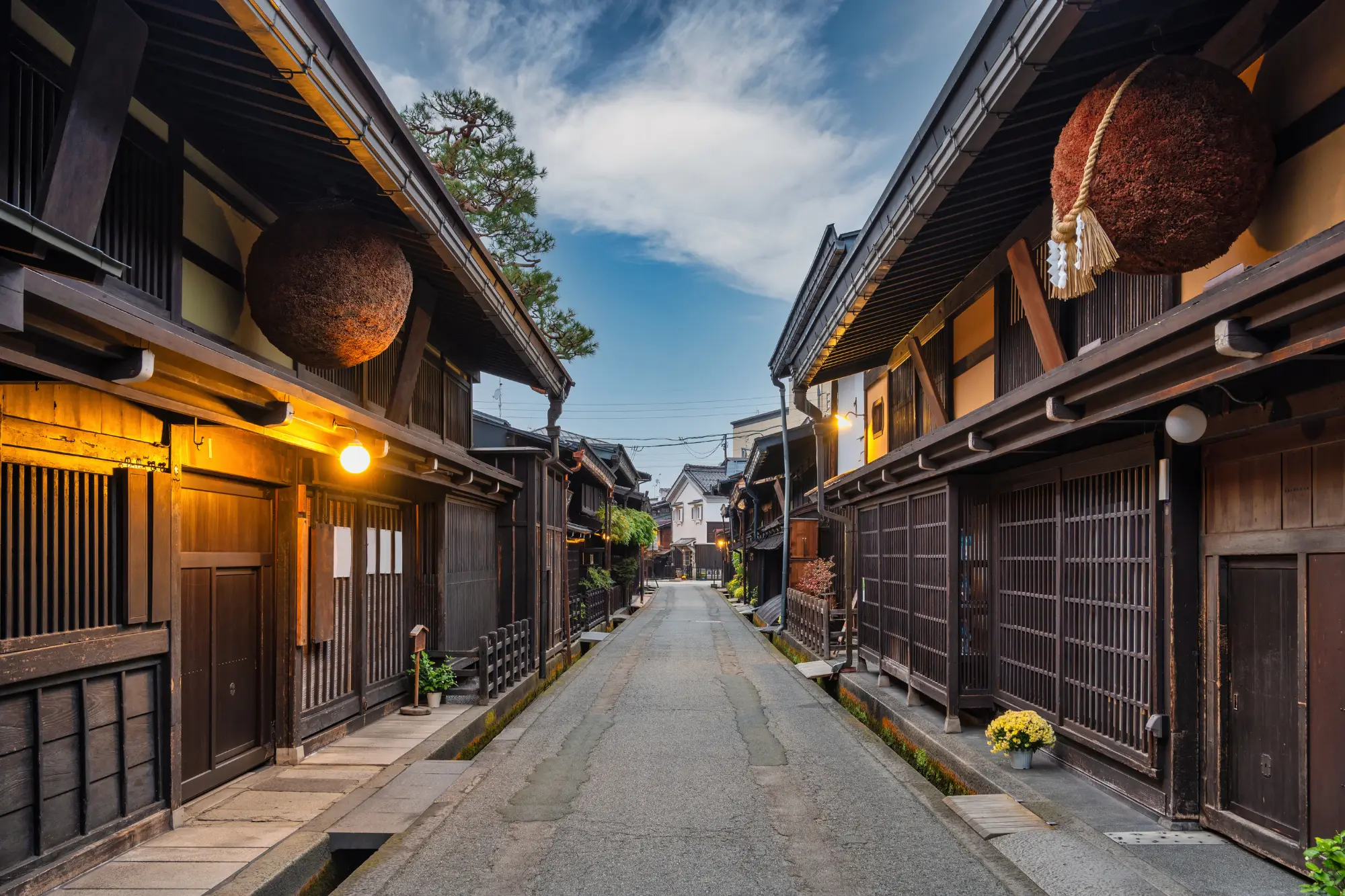
Sanmachi Suji is the historic heart of Takayama and one of the city’s most recognizable attractions. Traditional wooden townhouses line the streets, many of which now house restaurants, cafés, sake breweries, craft shops, and souvenir stores.
The area is particularly pleasant in the morning before it becomes busy. Visitors can also look for the cedar-leaf balls displayed outside local sake breweries.
- Location: Central Takayama
- Best for: History, architecture, shopping, and photography
- Suggested time: 1.5-2 hours
- Admission: Free
- Highlights: Traditional townhouses, sake breweries, shops, cafés, and local food
2. Visit Takayama Jinya
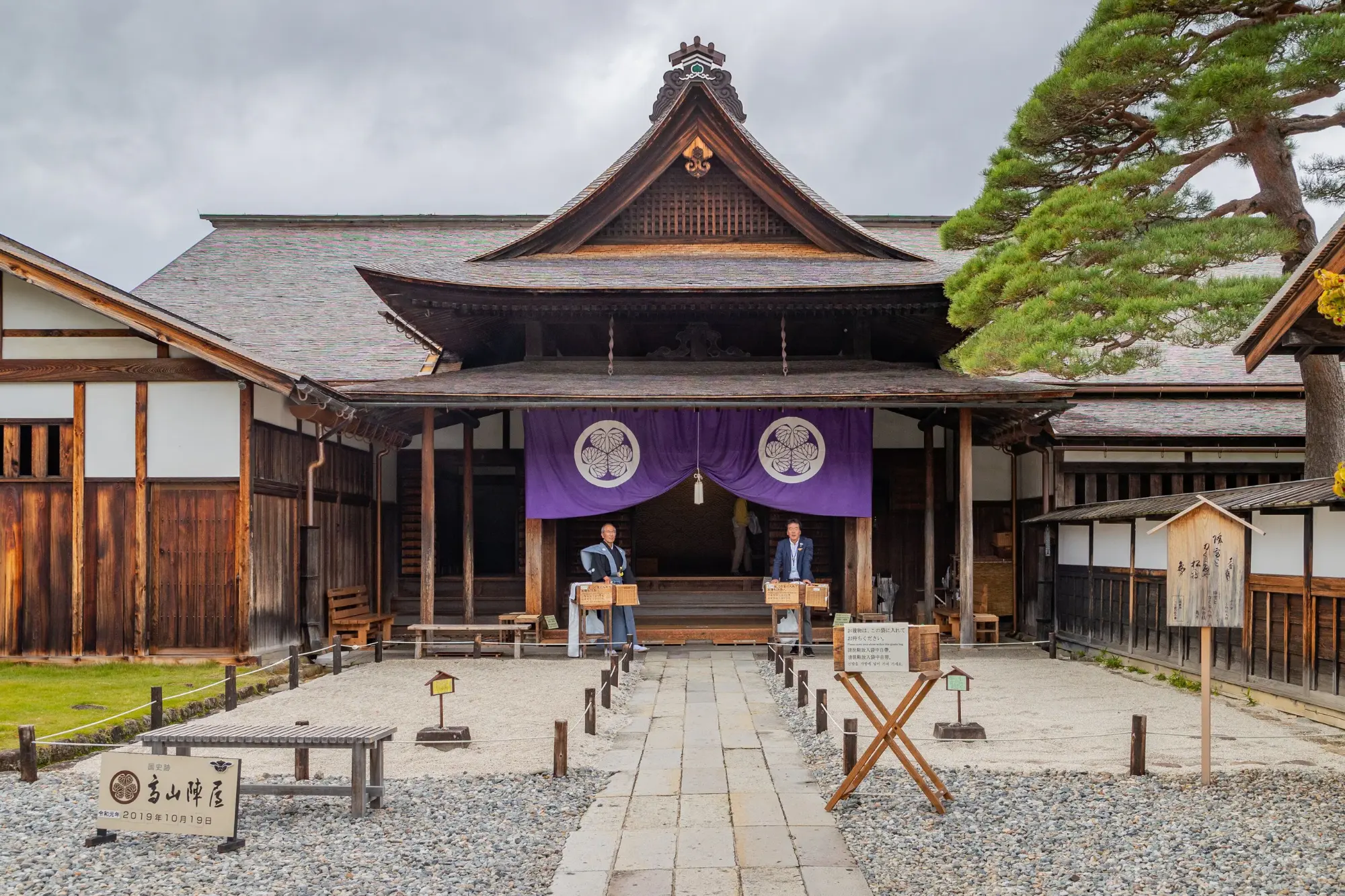
Takayama Jinya is a historic government building that was used by officials of the Edo Shogunate after Hida came under direct shogunate control.
It is an important example of Japan’s former administrative architecture and is the only surviving building of its type in the country.
- Location: Central Takayama
- Best for: History and architecture
- Suggested time: 1-1.5 hours
- Admission: Around ¥440 for adults
- Highlights: Government offices, traditional rooms, gardens, historical exhibits
3. Experience the Takayama Morning Market
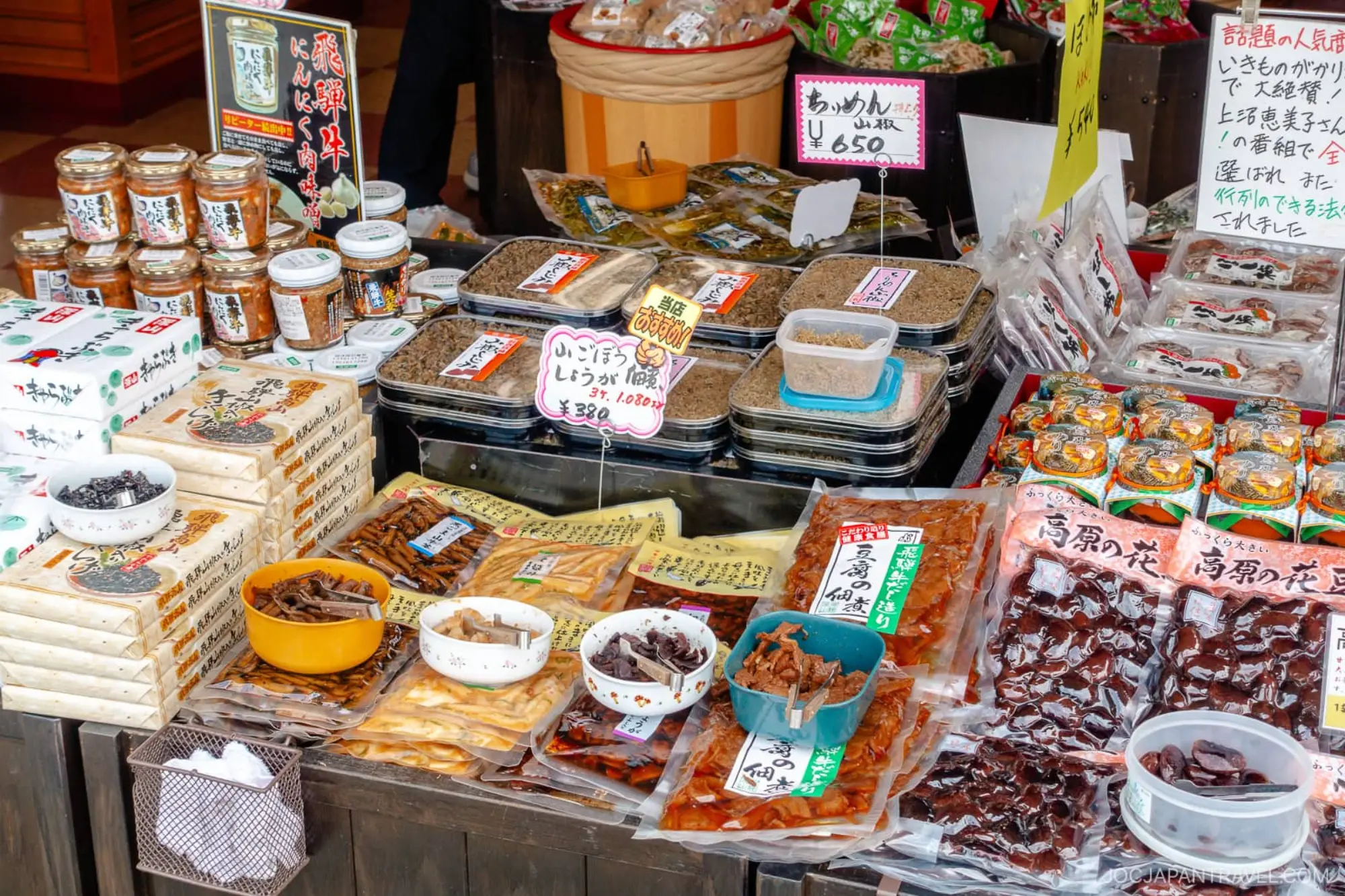
The Takayama Morning Market consists of two main markets: Miyagawa Morning Market along the Miyagawa River and Jinya-mae Morning Market in front of Takayama Jinya.
The markets sell seasonal vegetables, fruit, pickles, flowers, local snacks, crafts, and souvenirs such as Sarubobo dolls and wooden products. The markets are open year-round, generally until around noon.
- Location: Miyagawa River & Takayama Jinya
- Best for: Local food, shopping, and local culture
- Suggested time: 1-1.5 hours
- Admission: Free
- Opening hours: Around 7:00 AM-12:00 PM from April-November; 8:00 AM-12:00 PM from December-March
- Highlights: Fresh produce, pickles, crafts, souvenirs, local snacks
Tip: Arrive early, especially if you want to see the market at its liveliest. The official tourism guide recommends arriving around 6:00 AM when staying in Takayama.
4. Visit Hida Folk Village
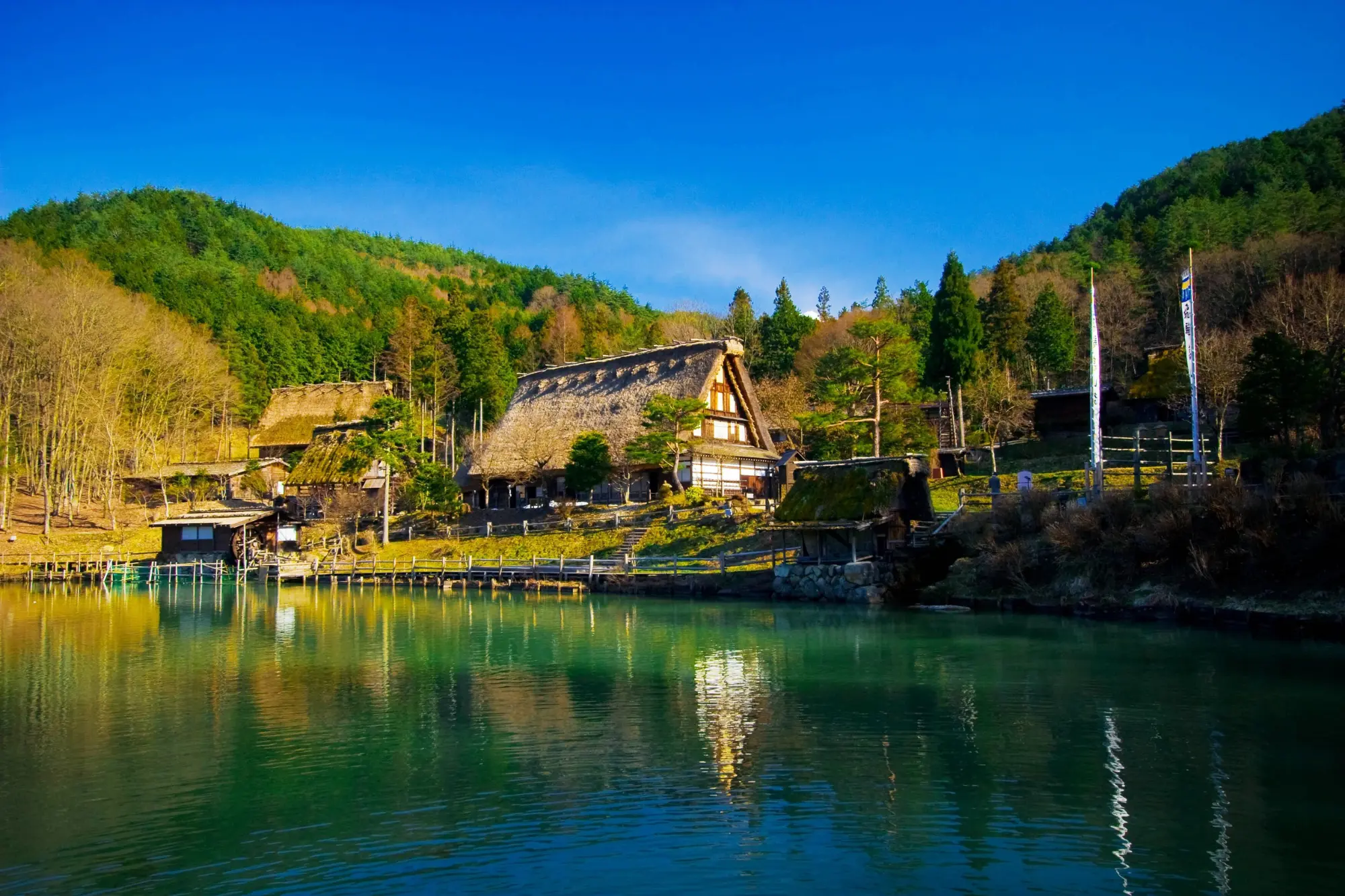
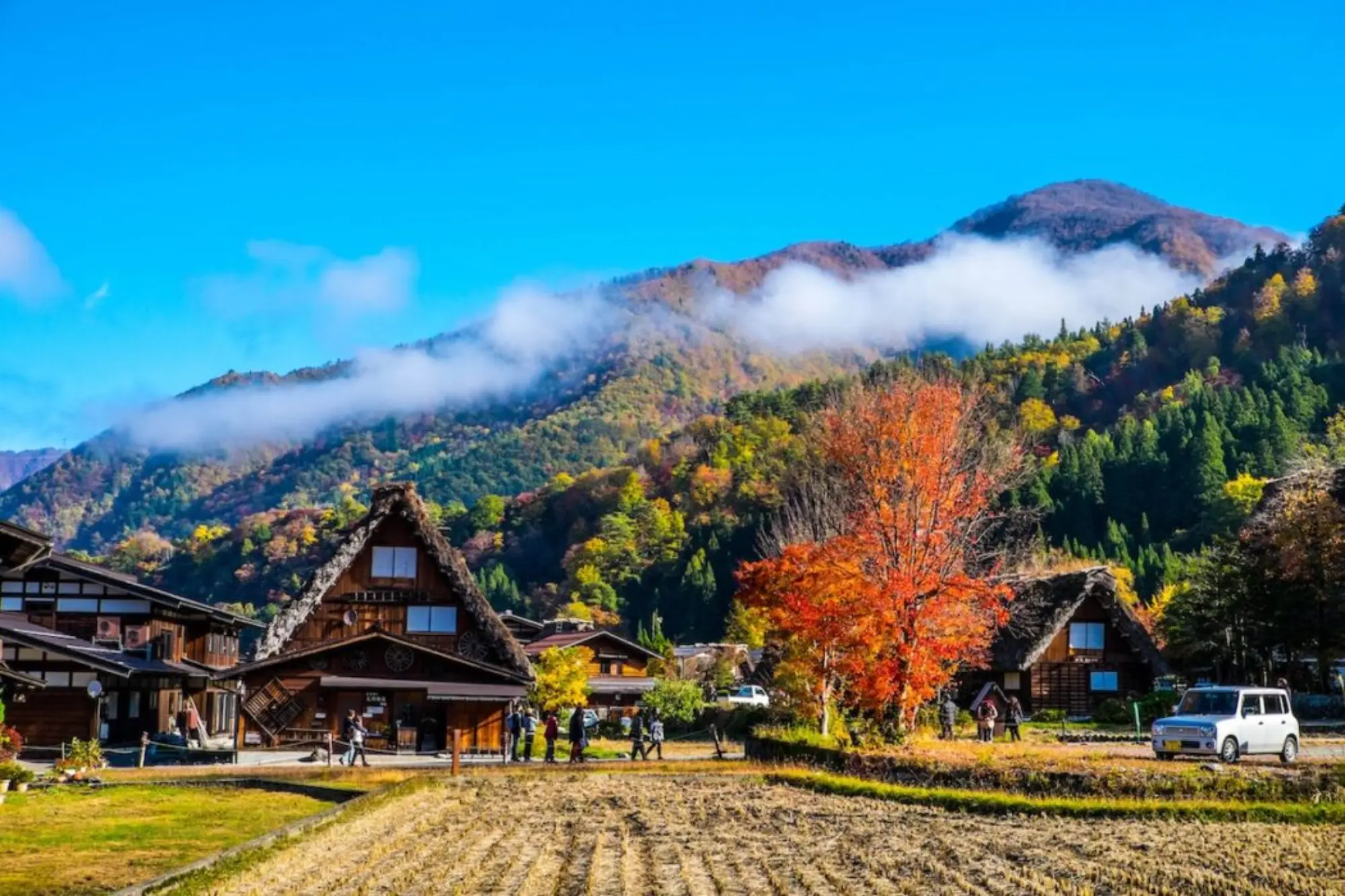
Hida Folk Village (Hida-no-Sato) is one of the most distinctive Takayama attractions and a key place to experience the traditional architecture and rural culture of the Hida region.
The open-air museum covers approximately 99,000 m² and contains more than 30 traditional buildings, including steeply thatched houses designed to withstand the region’s heavy snowfall. Visitors can enter the houses, see historical household items, and watch demonstrations of traditional crafts such as lacquerwork, weaving, and dyeing.
- Location: About 10 minutes by bus from JR Takayama Station
- Best for: Traditional culture, architecture, photography, and families
- Suggested time: 2-3 hours
- Admission: ¥700 for adults; ¥200 for elementary and junior high school students
- Opening hours: 8:30 AM-5:00 PM
- Highlights: Thatched-roof houses, traditional tools, craft demonstrations, mountain scenery
5. Visit Sakurayama Hachimangu Shrine
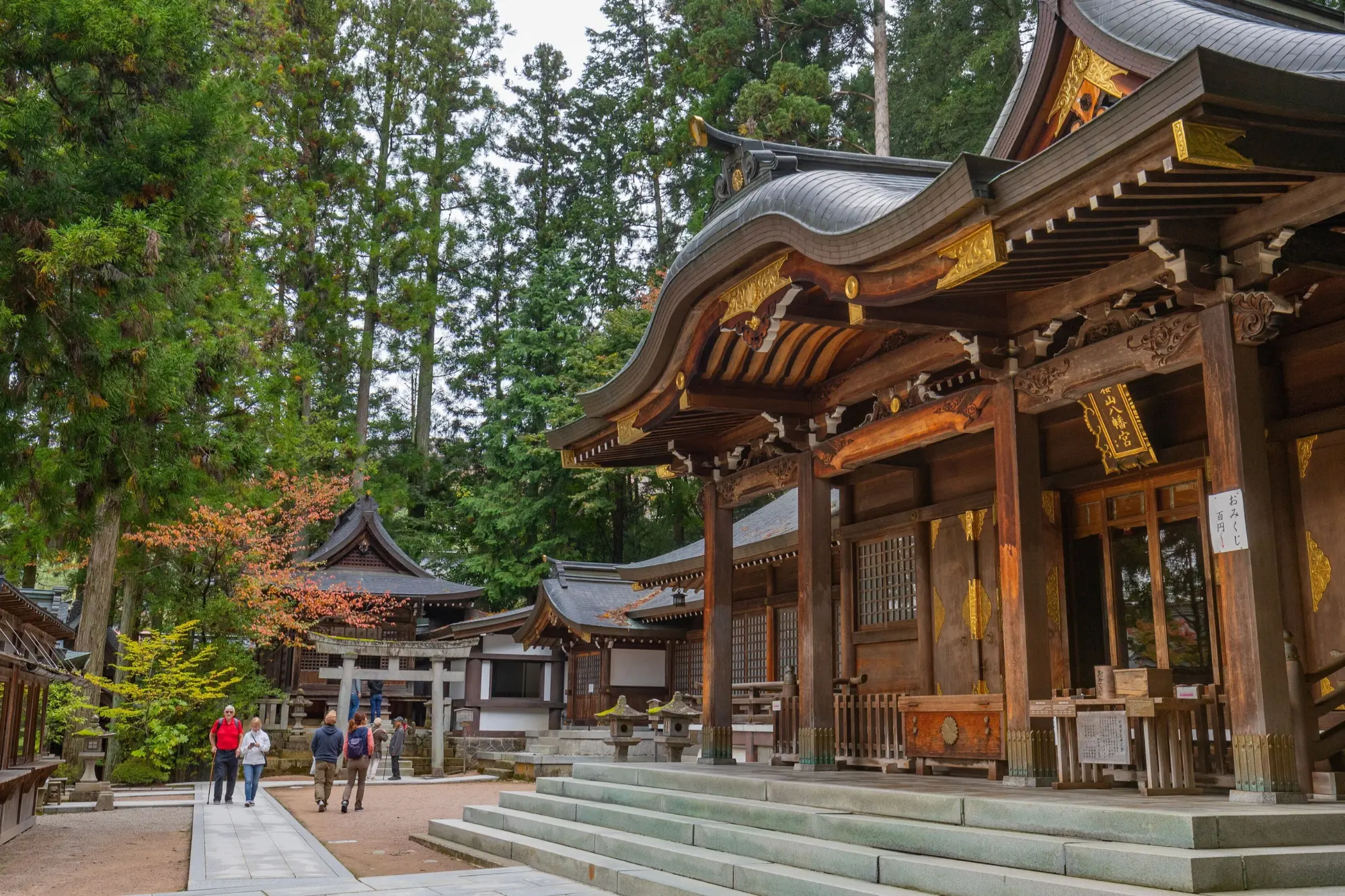
Sakurayama Hachimangu Shrine is one of Takayama’s important Shinto shrines and is closely connected with the city’s autumn festival.
The shrine grounds provide a quieter cultural experience and are also home to the Takayama Festival Floats Exhibition Hall, where decorated festival floats are displayed.
- Location: Northern Takayama
- Best for: Culture, religion, architecture, and history
- Suggested time: 1-1.5 hours
- Admission: Shrine grounds are free; the exhibition hall charges an entrance fee
- Highlights: Shrine architecture, festival traditions, seasonal scenery
6. Discover Hida Kokubunji Temple
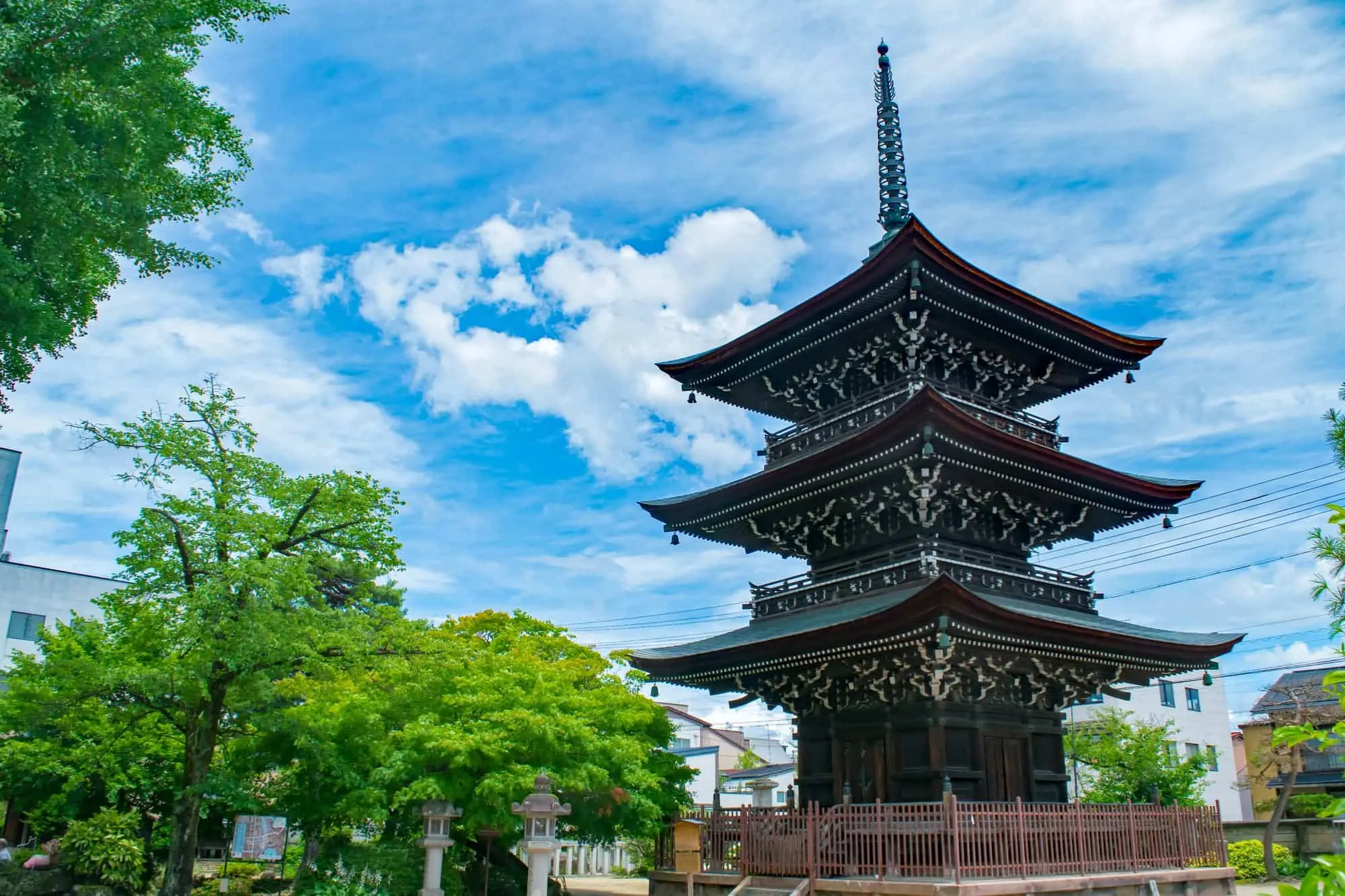
Hida Kokubunji Temple is one of Takayama’s oldest religious sites and is recognizable for its three-story pagoda and large ginkgo tree.
The temple provides a peaceful stop close to Takayama Station and can easily be combined with the morning market and Old Town.
- Location: Near JR Takayama Station
- Best for: History, religion, and architecture
- Suggested time: 30-60 minutes
- Admission: Free to visit the temple grounds
- Highlights: Three-story pagoda, ginkgo tree, traditional architecture
7. Walk Along the Miyagawa River
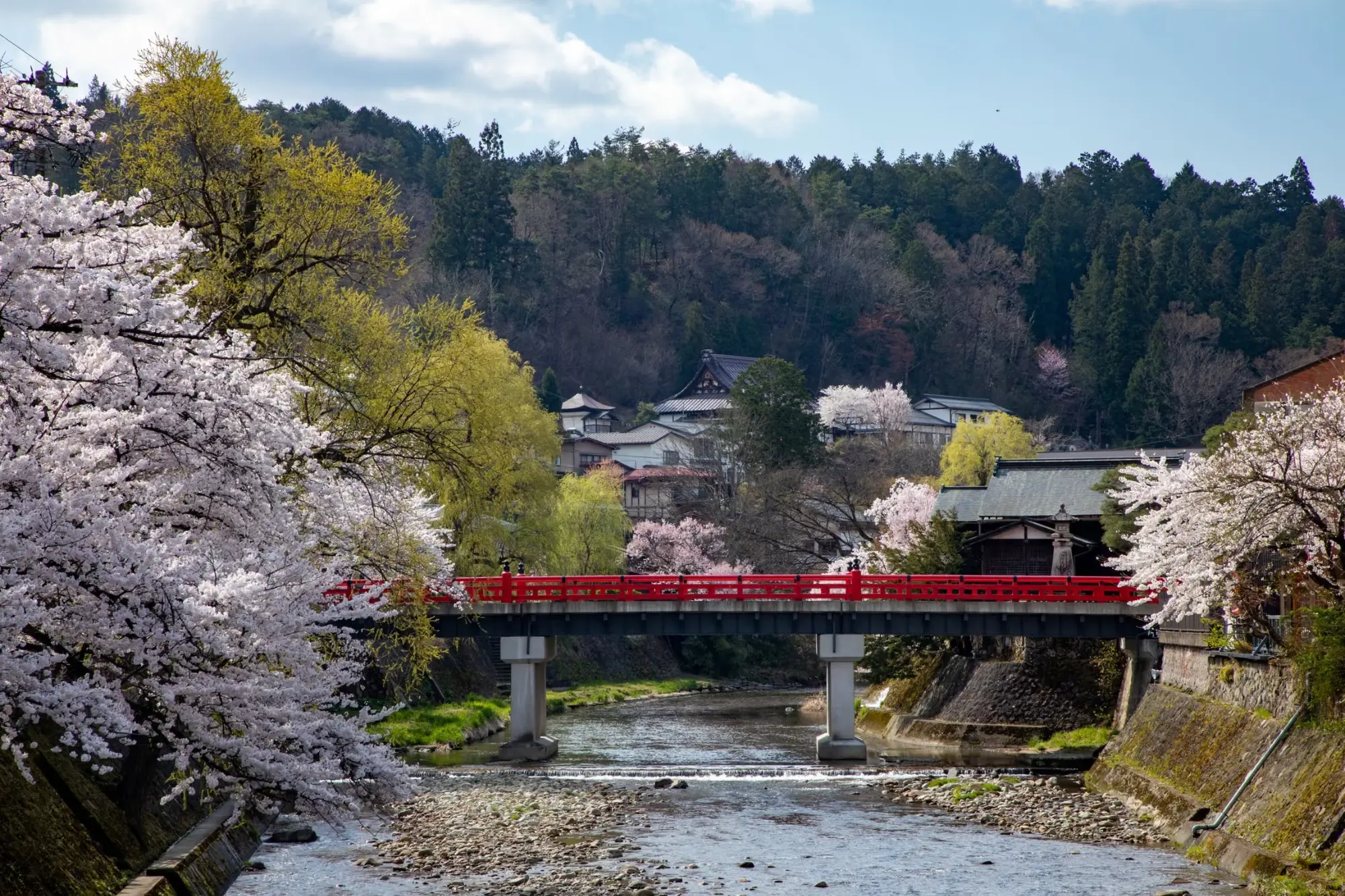
The Miyagawa River runs through the center of Takayama and forms an important part of the city’s historic landscape.
Walking along the river is an easy way to connect the morning market, traditional streets, bridges, and central neighborhoods.
- Location: Central Takayama
- Best for: Walking, photography, and local atmosphere
- Suggested time: 30-60 minutes
- Admission: Free
- Highlights: River views, bridges, morning market, traditional townscape
8. Experience Takayama’s Traditional Sake Culture
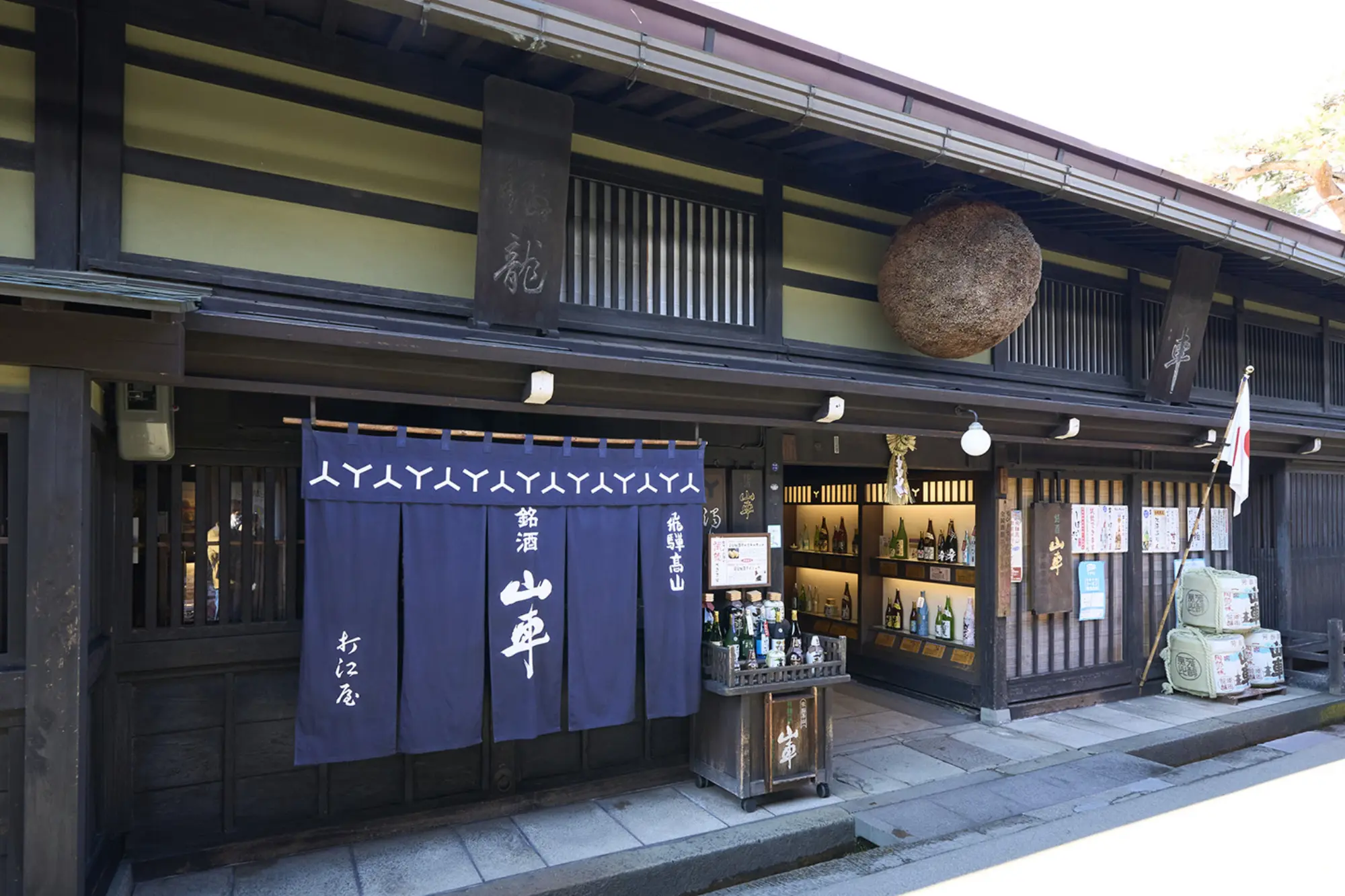
Takayama’s Old Town is home to several historic sake breweries. The area’s cool mountain climate and high-quality local water have supported sake production for generations.
Visitors can explore brewery storefronts, learn about local sake-making traditions, and look for the distinctive sugidama cedar balls hanging outside breweries.
- Best for: Food and cultural experiences
- Suggested time: 1-2 hours
- Highlights: Sake breweries, traditional buildings, local products
Takayama Food: What to Eat
Takayama’s mountain setting has created a distinctive local food culture.
- Hida Beef: High-quality beef from Gifu’s Hida region, often served grilled, as sushi, or in hot dishes.
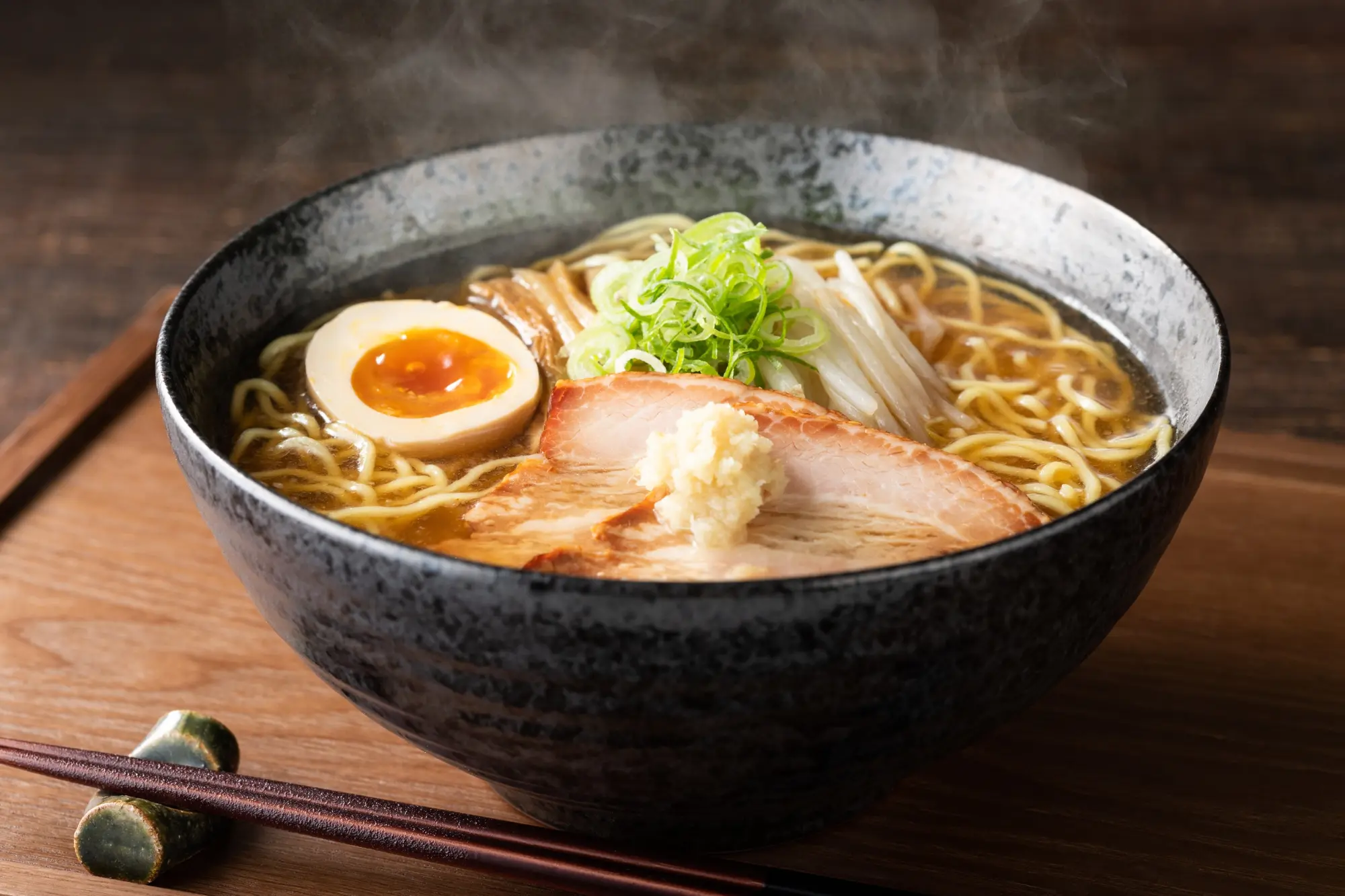
- Takayama Ramen: A local ramen style with thin, curly noodles and a soy-based broth.
- Hoba Miso: Miso and local ingredients grilled on a magnolia leaf, traditionally served with rice.
- Mitarashi Dango: Rice dumplings grilled and coated with a savory soy-based sauce.
- Local Pickles: Seasonal vegetables and mountain produce are commonly preserved as pickles.
- Hida Sake: Local breweries produce sake using regional water and traditional techniques.
Best Time to Visit Takayama
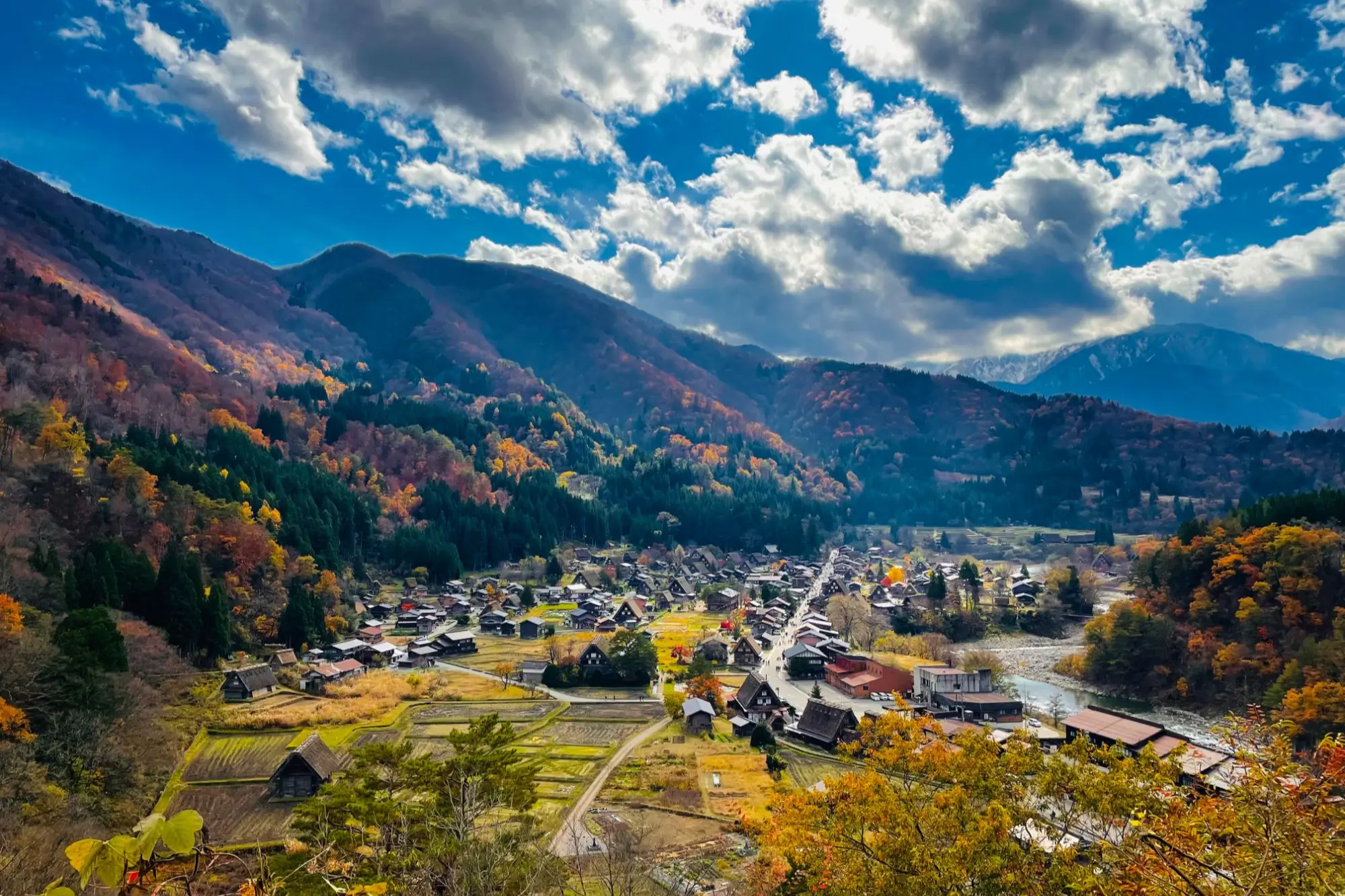
Takayama can be visited throughout the year, with each season offering a different atmosphere.
|
Season |
Months | Weather & Highlights |
Best For |
| Spring | March-May | Cool temperatures, fresh greenery, and spring scenery. The Spring Takayama Festival takes place in April. | Festivals, sightseeing, photography |
| Summer | June-August | Mild to warm weather compared with many Japanese cities, with green mountain landscapes. | Hiking, countryside, outdoor activities |
| Autumn | September-November | Cooler temperatures and colorful foliage. The Autumn Takayama Festival takes place in October. | Autumn leaves, festivals, sightseeing |
| Winter | December-February | Cold temperatures and frequent snow create a traditional mountain atmosphere. | Snow scenery, winter photography, nearby hot springs |
Spring and autumn are the best times to visit Takayama, offering comfortable weather, seasonal scenery, and famous festivals.
April is ideal for experiencing the Takayama Spring Festival, while October is perfect for autumn foliage and the Takayama Autumn Festival.
Winter is suitable for travelers who want to see Takayama’s snowy mountain scenery and combine the trip with Shirakawa-go.
How to Get to Takayama
Takayama is accessible by train and highway bus from several major cities in Japan.
- From Tokyo: The most common route is to travel by Shinkansen to Nagoya, then continue to Takayama by the JR Hida limited express.
- From Nagoya: The JR Hida limited express provides a direct connection between Nagoya and Takayama, making Nagoya one of the main gateways to the city.
- From Osaka & Kyoto: Travelers can take a train to Nagoya and continue to Takayama, or use highway bus services depending on the itinerary.
- From Matsumoto: Takayama can also be combined with Matsumoto through highway bus routes crossing the Japanese Alps.
- From Shirakawa-go: Highway buses connect Takayama with Shirakawa-go, making it easy to combine the two destinations in one Central Japan itinerary.
Getting Around Takayama
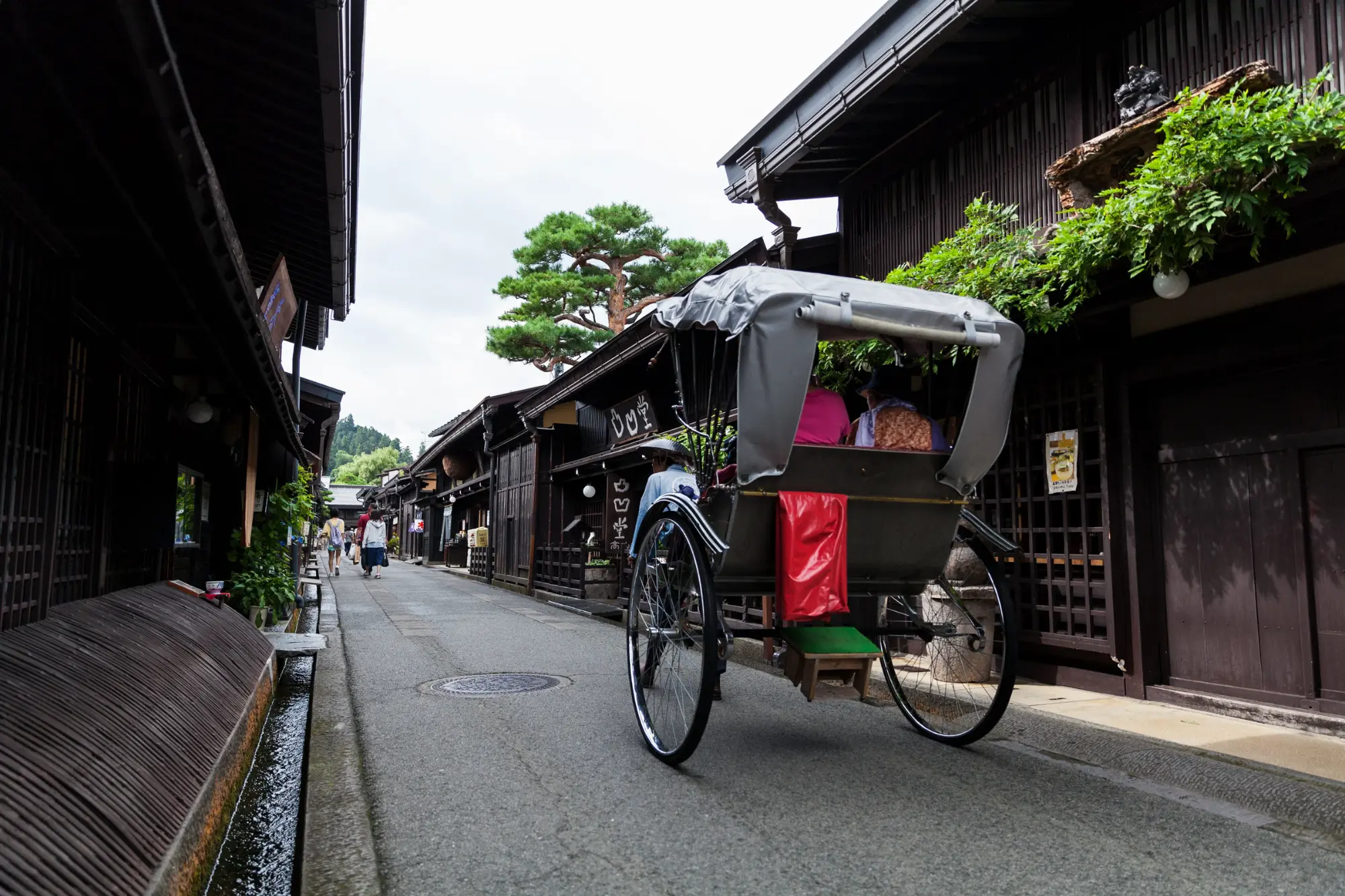
Takayama’s historic center is compact, and many attractions can be reached on foot.
- Walking: Best for Sanmachi Suji, Takayama Jinya, morning markets, and central temples.
- Local buses: Useful for Hida Folk Village and attractions outside the central area.
- Taxi: Convenient for families or travelers carrying luggage.
- Highway buses: Useful for longer trips to Shirakawa-go, Matsumoto, and other regional destinations.
The Sarubobo Bus connects JR Takayama Station with Hida Folk Village, with the journey taking around 10 minutes. The one-way fare is currently ¥210.
Takayama Travel Tips
- Start early: Visit the Takayama Morning Market in the morning, as most stalls close around noon. Early visits are also more comfortable for exploring the Old Town.
- Explore on foot: Sanmachi Suji, Takayama Jinya, the morning markets, and nearby temples are close to each other and can easily be combined in one walking route.
- Allow time for Hida Folk Village: Spend around 2–3 hours exploring its traditional houses, craft displays, and mountain scenery.
- Check the weather: Takayama has a cooler mountain climate, with significant snowfall in winter. Check the forecast and prepare suitable clothing, especially from December to February.
- Try local food: Don’t miss Hida beef, Takayama ramen, Hoba miso, and local sake to experience the flavors of the Hida region.
- Wear comfortable shoes: Walking is one of the easiest ways to explore Takayama’s historic streets, markets, and attractions.
- Plan nearby trips: Takayama can be combined with Shirakawa-go, Matsumoto, or Gero Onsen. Check bus and train schedules in advance when planning connections.
Frequently Asked Questions About Takayama
1. Is Takayama worth visiting?
Takayama offers a different experience from Japan’s major cities, combining traditional architecture, mountain scenery, local food, historic sites, and rural culture in a compact destination.
2. What are the best things to do in Takayama?
Popular things to do in Takayama include exploring Sanmachi Suji, visiting Takayama Jinya, experiencing the Takayama Morning Market, discovering Hida Folk Village, visiting local temples and shrines, and trying Hida beef.
3. What is Hida Folk Village in Takayama?
Hida Folk Village, or Hida-no-Sato, is an open-air museum featuring more than 30 traditional buildings across an approximately 99,000 m² site. It recreates the traditional rural landscape of the Hida region and includes demonstrations of local crafts.
4. When is the Takayama Morning Market open?
The Miyagawa Morning Market and Jinya-mae Morning Market operate throughout the year. They generally open from 7:00 AM to noon from April to November and 8:00 AM to noon from December to March.
5. How many days do you need in Takayama?
2 days and 1 night is enough to visit the main attractions and experience the historic center. A longer stay allows more time for Hida Folk Village, museums, local food, and nearby destinations.
Conclusion
Takayama is a destination where traditional Japanese culture, mountain landscapes, history, and local food come together. Its preserved Old Town, historic government house, morning markets, temples, and festivals offer a glimpse into the heritage of the Hida region.
Among the city’s highlights, Hida Folk Village provides an introduction to traditional rural architecture, while the Takayama Morning Market offers a more everyday local experience. Together with Sanmachi Suji, Takayama Jinya, local food, and nearby mountain destinations, these attractions make Takayama a distinctive stop in a Central Japan itinerary.
Discover Japan tour packages with Nicetrips and experience the historic streets, mountain scenery, traditional culture, and local flavors of Central Japan. Follow the Nicetrips Blog for more destination guides, travel tips, and inspiration for your next journey.