Halong Bay is one of Vietnam’s most iconic natural destinations, famous for its emerald waters, towering limestone islands, spectacular caves, and peaceful seascapes. Located in northeastern Vietnam, the bay forms part of the Ha Long Bay – Cat Ba Archipelago, a UNESCO World Heritage property covering 65,650 hectares and including 1,133 islands and islets. For travelers, a trip to Halong Bay is more than a sightseeing excursion. Whether you are planning a short visit, an overnight cruise, or a longer Ha Long Bay tour, this guide covers the essentials, including the landscape, history, things to do in Halong Bay, weather in Halong Bay, cruise options, local food, and practical travel tips.
About Ha Long Bay
A Natural Landmark of Northern Vietnam
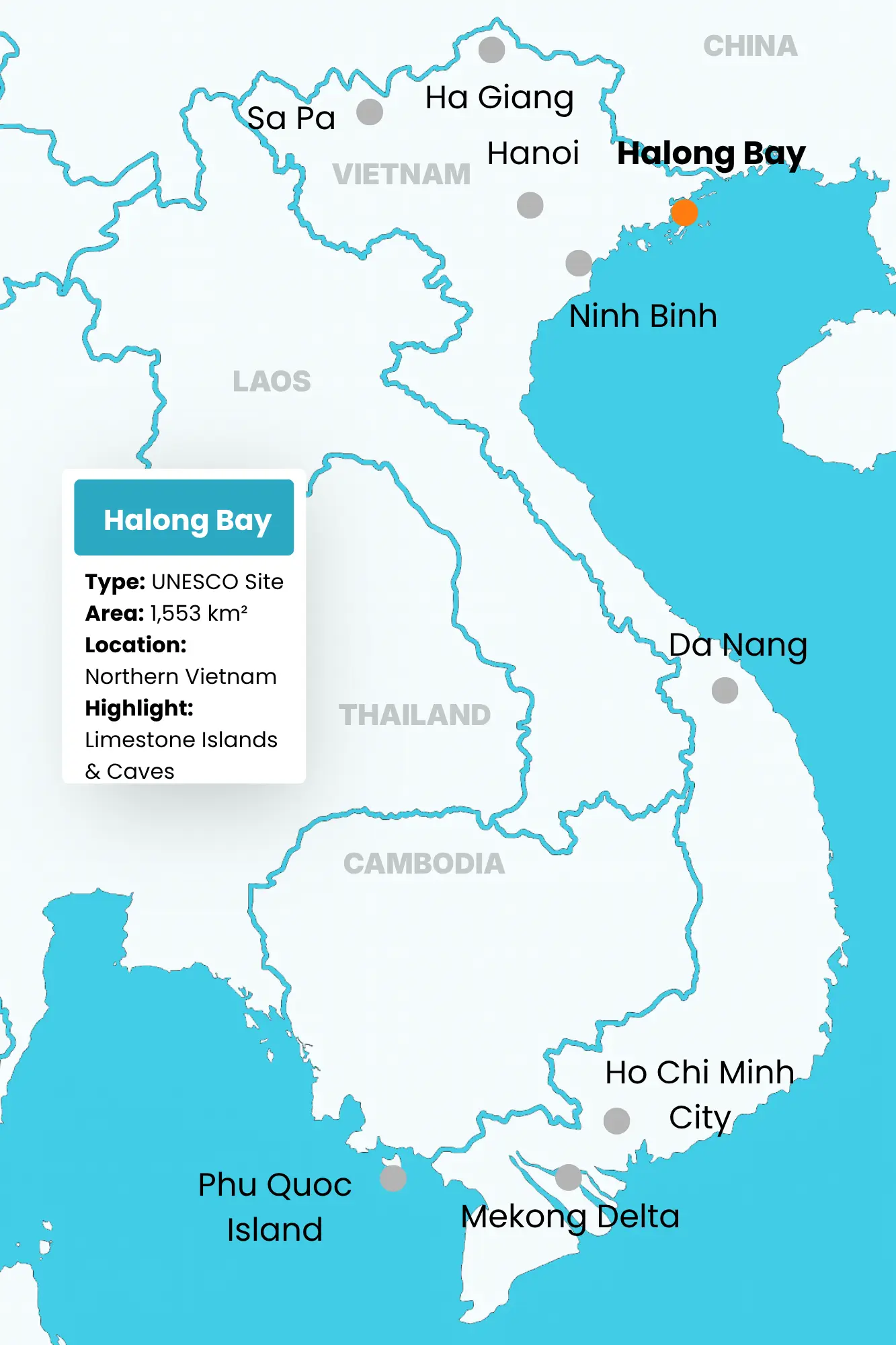
Halong Bay is located in northeastern Vietnam, within the broader UNESCO-listed Ha Long Bay – Cat Ba Archipelago, which extends across Quang Ninh Province and Hai Phong City. The area is characterized by hundreds of limestone islands and islets rising dramatically from the sea, creating one of the country’s most recognizable landscapes.
The scenery is shaped by marine-invaded tower karst, a geological landscape in which limestone formations have been gradually sculpted by water and weather over millions of years. This creates the distinctive towers, cliffs, caves, arches, and sheltered waterways that travelers see today.

Halong Bay at a Glance
- Location: Northeastern Vietnam, mainly Quang Ninh Province and the Cat Ba area
- UNESCO World Heritage: Inscribed in 1994, with significant boundary modifications in 2000 and 2023
- Total UNESCO property: 65,650 hectares
- Islands and islets: 1,133
- Landscape: Limestone islands, tower karst, caves, forests, bays, and marine ecosystems
- Distance from Hanoi: Approximately 165 km to the UNESCO property
- Best known for: Cruises, caves, kayaking, limestone karsts, and scenic seascapes
The current UNESCO designation is particularly important because it brings Halong Bay and the Cat Ba Archipelago together as one World Heritage property. Cat Ba was incorporated through the 2023 boundary modification, creating a larger protected landscape that combines marine, limestone, forest, and island ecosystems.
History of Ha Long Bay

Halong Bay has a long geological and cultural history that has shaped the landscape travelers see today. Its limestone islands and caves were formed over millions of years, while local communities have long depended on the surrounding waters.
- Geological history: The bay is known for its distinctive marine-invaded tower karst, with limestone towers, caves, and sea channels shaped by natural processes over millions of years.
- Local communities: Fishing communities have traditionally lived and worked around the bay, making the sea an important part of local life.
- 1994: Halong Bay was first recognized by UNESCO as a World Heritage Site for its outstanding scenic value.
- 2000: The site was expanded to include its important geological value.
- 2023: The UNESCO property was expanded to include the Cat Ba Archipelago, creating the current Ha Long Bay – Cat Ba Archipelago World Heritage Site.
Today, Halong Bay is recognized not only for its spectacular scenery but also for its geological and ecological importance. With growing tourism, protecting the landscape and managing visitor numbers sustainably have become increasingly important.
Geography of Ha Long Bay
Halong Bay is located in northeastern Vietnam, where limestone islands rise dramatically from the sea. Its unique combination of water, karst formations, caves, forests, and marine ecosystems creates the landscape that makes the destination so distinctive.
- Location: Northeastern Vietnam, within Quang Ninh Province and Hai Phong City.
- Distance from Hanoi: Approximately 165 km from Hanoi.
- UNESCO property: Covers 65,650 hectares and includes 1,133 islands and islets.
- Landscape: Characterized by limestone towers, caves, sea channels, sheltered bays, and forested islands.
- Karst formations: Halong Bay is one of the world’s most important examples of marine-invaded tower karst, including fengcong and fenglin formations.
- Cat Ba Archipelago: The UNESCO property now includes Cat Ba, adding forests, limestone mountains, and diverse marine ecosystems to the wider landscape.
This geography is also why cruising is one of the best ways to experience Halong Bay. From the water, travelers can see the scale and variety of the limestone formations while moving through the islands, caves, and sheltered waterways.
Weather in Ha Long Bay
Halong Bay has noticeable seasonal changes, from cool winter weather to hot, humid summers. Because most things to do in Halong Bay take place outdoors or on the water, weather conditions are particularly important when planning a Ha Long Bay tour.
| Season | Months | Temperature | Weather & Travel Notes |
| Spring | March-April | Around 19-28°C (66-82°F) | Temperatures gradually rise, with relatively comfortable conditions. March-April can be a good period for cruising, sightseeing, and outdoor activities. |
| Summer | May-September | Around 25-31°C (77-88°F) | Hot, humid, and much wetter. July is the hottest month, while August receives the most rainfall. Heavy rain and tropical storms can affect cruise schedules. |
| Autumn | October-November | Around 19-28°C (66-82°F) | Cooler and less humid, with rainfall decreasing. October and November are generally comfortable for cruises and outdoor sightseeing. |
| Winter | December-February | Around 14-22°C (57-72°F) | Cool and relatively dry. January is the coldest month, while February is the driest, with clearer skies often providing better visibility. |
Temperature ranges are simplified from WeatherSpark’s average monthly high and low temperatures for Ha Long City.
Best Time to Visit Halong Bay
There is no single best time for every traveler. April-June and September–November are generally recommended for a balance of comfortable temperatures and outdoor conditions, while WeatherSpark identifies mid-February to mid-April and late October to late December as favorable periods for warm-weather activities.
Storm Season in Halong Bay
Storms are an important consideration when planning a Ha Long Bay tour, particularly from June to August, which is the stormy, hot, and humid period, while tropical storms can sometimes lead to cruise cancellations.
During periods of heavy rain or strong winds:
- Cruise routes or outdoor activities may be changed.
- Boat operations can be restricted or temporarily suspended for safety.
- Visibility may decrease, affecting panoramic Halong Bay views.
- Travelers should check the forecast before departure and keep some flexibility in their itinerary.
For the most reliable sightseeing conditions, consider traveling during the milder months and avoid planning a tightly scheduled itinerary during the peak storm season.
Things to Do in Ha Long Bay
From cruising through emerald waters to exploring limestone caves and kayaking between towering karsts, the best Things to Do in Halong Bay focus on the bay’s natural landscapes and coastal way of life. Whether you choose a day trip or an overnight cruise, these experiences offer different ways to discover one of Vietnam’s most iconic destinations.
1. Take a Cruise Through the Bay
A cruise is the classic way to discover Halong Bay. As the boat moves between limestone karsts and sheltered waterways, travelers can enjoy panoramic views of the bay from the deck.
The scenery changes throughout the day, from soft morning light and misty islands to warm colors around sunset. Overnight cruises also allow more time for activities such as cave visits, kayaking, and island excursions.

2. Explore the Caves
Exploring the caves is one of the most popular things to do in Halong Bay. Formed within the bay’s limestone landscape, these caves feature impressive chambers, stalactites, and stalagmites.
Some of the best-known caves include Sung Sot Cave, Thien Cung Cave, and Me Cung Cave, each offering a different atmosphere and geological character. Cave visits are commonly included in cruise itineraries, although the exact stops depend on the route and operating conditions.
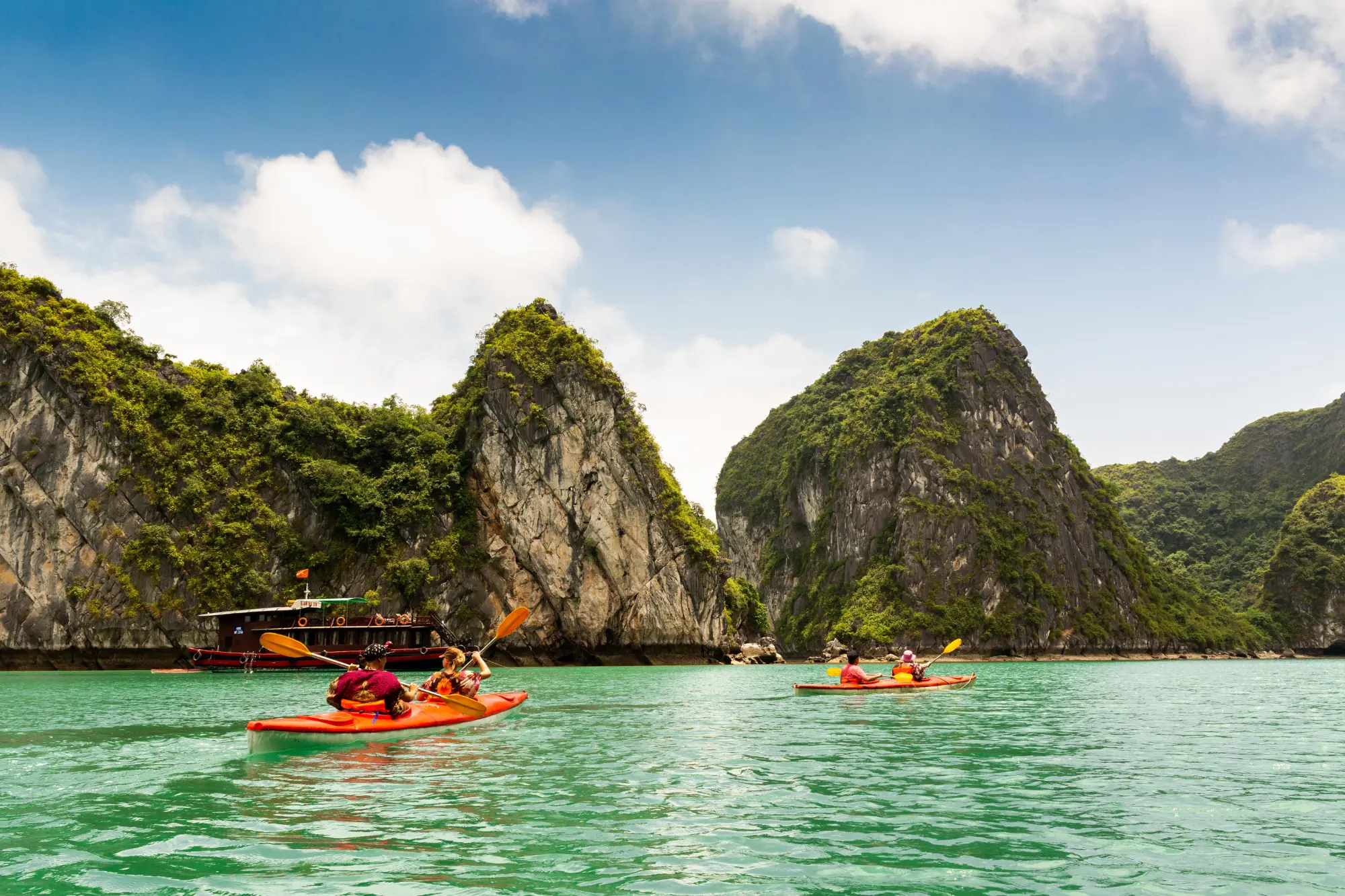
3. Go Kayaking
Kayaking offers a closer look at Halong Bay’s limestone formations and quieter waterways. Paddling through sheltered areas allows travelers to get closer to the karsts and explore places that are difficult to reach by larger boats.
Some kayaking routes also pass through areas associated with floating communities. Since sea and weather conditions can affect outdoor activities, kayaking schedules may change, particularly during the wetter months.
4. Visit Floating Communities
Halong Bay is not only about dramatic scenery. The surrounding waters have long been connected to local fishing communities and traditional ways of life.
Visiting a floating community offers a chance to learn how people have adapted to living and working on the water. It also adds a cultural dimension to a trip that might otherwise focus mainly on landscapes and sightseeing.
5. Enjoy the View From the Cruise Deck
Sometimes, one of the best things to do in Halong Bay is simply to slow down and enjoy the scenery. Find a comfortable spot on the deck and watch the limestone islands pass by. Early mornings can bring misty and peaceful views, while late afternoons offer softer light across the water.
This slower pace is one of the highlights of an overnight cruise, giving travelers time to appreciate the landscape rather than simply moving from one attraction to another.

6. Explore Cat Ba and Its Natural Landscapes
The Ha Long Bay – Cat Ba Archipelago offers opportunities to explore beyond the traditional cruise routes. Cat Ba Island combines limestone mountains, forests, caves, beaches, and marine environments.
Visitors can explore hiking trails and natural landscapes around Cat Ba, experiencing a different side of the UNESCO World Heritage property. For travelers who enjoy nature and outdoor activities, adding Cat Ba can turn a traditional Halong Bay trip into a broader island-and-sea adventure.
7. Enjoy the Sunset and Sunrise
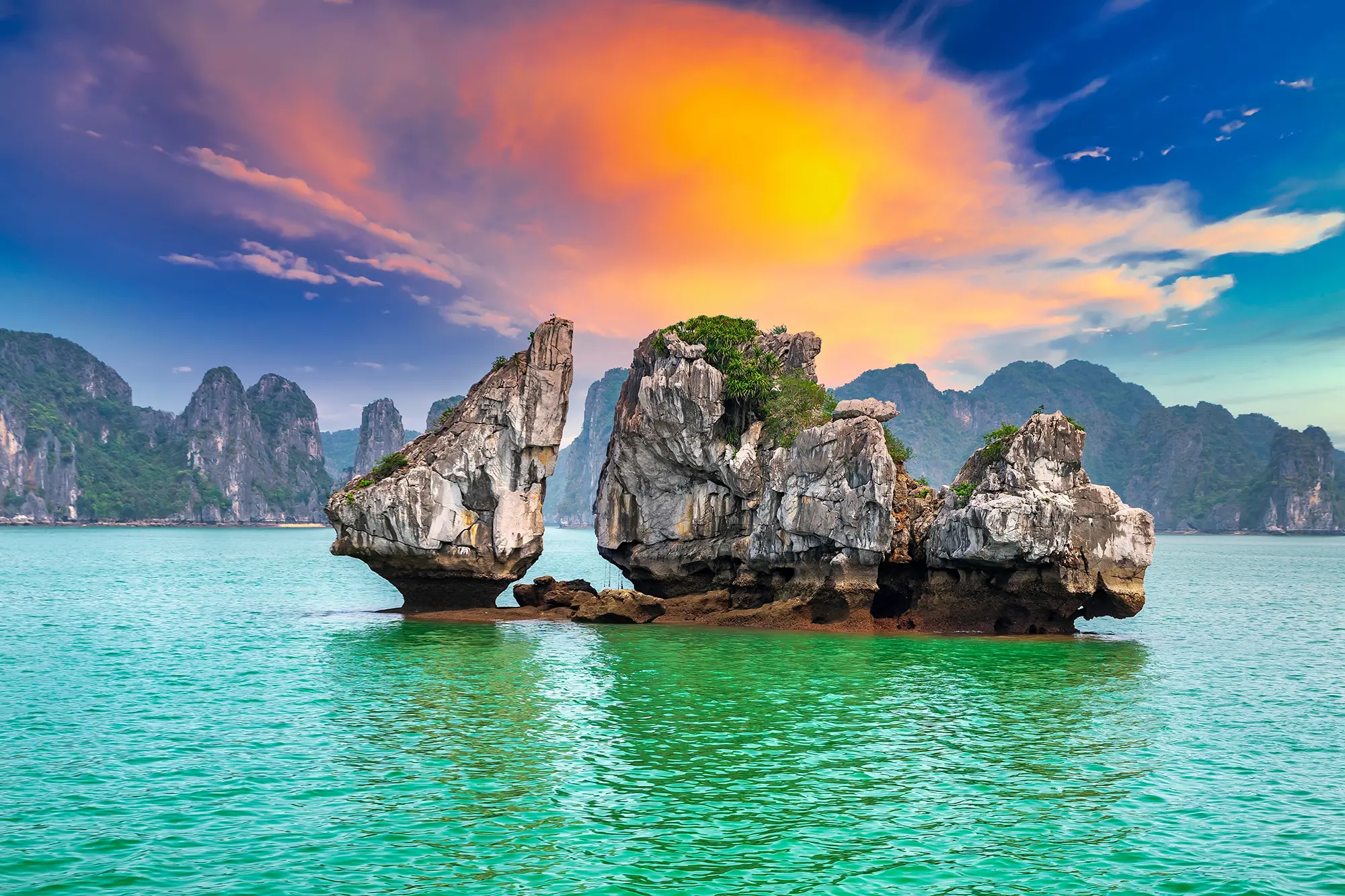
Sunrise and sunset are among the most memorable moments on a Halong Bay cruise. As the light changes, the limestone karsts take on different colors and shapes, creating a constantly changing Halong Bay view.
Morning mist can create a peaceful atmosphere, while late afternoon brings warmer tones across the water. Instead of filling every moment with scheduled activities, leave some time to simply watch the scenery and enjoy the journey.
Food to Try in Ha Long Bay for Travellers
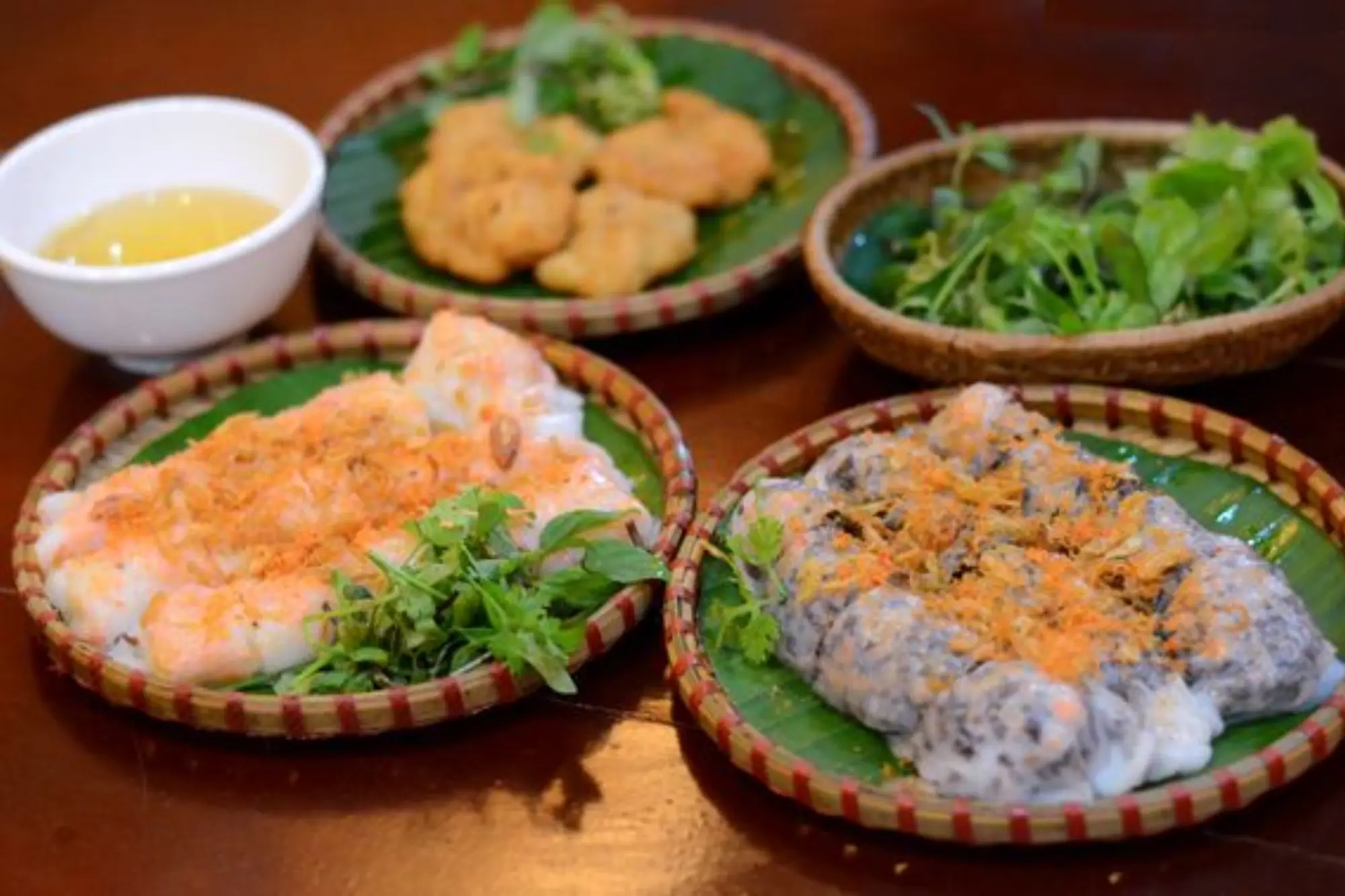
Seafood naturally plays an important role in Halong’s local food culture. From hand-pounded squid cakes to fresh shellfish and local desserts, these are some specialties worth trying:
- Chả Mực Hạ Long: A local specialty made from fresh squid, hand-pounded and fried until firm, chewy, and flavorful. It is often served with sticky rice or bánh cuốn.
- Bánh Cuốn Chả Mực: Soft steamed rice rolls filled with minced pork and wood ear mushrooms, paired with hot, chewy squid patties for a classic local combination.
- Bún Bề Bề & Bún Cù Kỳ: Seafood noodle soups featuring naturally sweet broth, firm mantis shrimp, or cù kỳ, a distinctive local crab-like seafood.
- Fresh Seafood: Enjoy locally sourced oysters, clams, prawns, fish, and sea snails, prepared in a variety of simple and flavorful ways.
- Halong Yogurt: A popular local snack combining cool, tangy yogurt with chewy tapioca pearls and creamy coconut milk.
Recommended Places for trying Halong local food:
- Bánh Cuốn Chả Mực Gốc Bàng: Alley 1 Nhà Hát, Bạch Đằng Street, Halong.
- Bún Cù Kỳ Hường Béo: 20 Tấn Mài Street, Bãi Cháy, Halong.
- Cô Nghi Pearl Yogurt: 10 Văn Lang Street, Hồng Gai, Halong.
- Cua Vàng Restaurant: 32 Phan Chu Trinh Street, Bãi Cháy, Halong, known for its seafood and crab dishes.
Fun Facts About Ha Long Bay
Beyond its spectacular limestone islands and emerald waters, Halong Bay is also full of fascinating stories, cultural details, and natural features. Here are a few fun facts that reveal more about what makes this UNESCO World Heritage site so unique.
1. Its Name Means “Descending Dragon”
“Ha Long” is commonly translated as “Descending Dragon”. The name is connected to the famous local legend of dragons descending from the sky to protect Vietnam.
2. The UNESCO Property Contains 1,133 Islands and Islets
The current UNESCO-listed Ha Long Bay – Cat Ba Archipelago covers 65,650 hectares and includes 1,133 islands and islets.
3. It Is More Than Just a Scenic Destination
UNESCO recognizes the property for both its exceptional scenic beauty and geological importance. Its marine-invaded tower karst makes it particularly significant from a geological perspective.
4. Cat Ba Became Part of the World Heritage Property in 2023
The UNESCO property was significantly expanded in 2023 to include the Cat Ba Archipelago, creating a larger connected World Heritage landscape across Quang Ninh Province and Hai Phong City.
5. The Landscape Is Constantly Changing With Light and Weather
Even when you visit the same area twice, the scenery can look completely different depending on sunlight, clouds, mist, and sea conditions. This is one reason photography and cruising remain such popular ways to experience the bay.
Ha Long Bay Travel Tips for First-Time Visitors
- Check the Weather Before Your Cruise: Weather can affect outdoor activities and cruise operations, particularly during the wetter and stormier months. Check the forecast shortly before departure and keep some flexibility in your itinerary.
- Choose Your Cruise Carefully: Do not choose a cruise based only on price. Compare the itinerary, cabin, meals, included activities, transportation, and cancellation conditions. A slightly different route can also result in a very different experience.
- Pack Light: Cabins on boats are usually more compact than standard hotel rooms. A small suitcase or soft travel bag is often easier to manage than large luggage, especially when moving between vehicles and boats.
- Bring Sun Protection: Even when temperatures do not feel extremely hot, time spent on open decks can mean significant sun exposure. Pack sunscreen, sunglasses, a hat, and light clothing for sunny days.
- Prepare for Changing Conditions: Halong Bay weather can change quickly, particularly during transitional seasons and the wetter months. Bring a light waterproof layer and avoid planning every activity too tightly.
- Wear Comfortable Shoes: Cave visits and island excursions can involve stairs, uneven surfaces, or short hikes. Comfortable shoes will make these activities much easier.
- Keep Time for the Landscape: Do not make your itinerary entirely about visiting caves and islands. Some of the most memorable parts of Halong Bay travel come from simply sitting on deck, watching the karsts, and enjoying the changing scenery.
- Consider Combining Halong Bay With Hanoi: Halong Bay works naturally as part of a Northern Vietnam itinerary. A common route can combine Hanoi with Halong Bay and other destinations such as Ninh Binh, allowing travelers to experience the region’s historic city life, limestone landscapes, rivers, and countryside within one journey. For travelers interested in Northern Vietnam, this combination also creates a good balance between cultural experiences and nature-based activities.
Frequently Asked Questions About Ha Long Bay
1. Is Halong Bay worth visiting?
Yes. Halong Bay is worth visiting for its limestone islands, emerald waters, caves, and scenic cruises. The UNESCO-listed landscape also offers opportunities for kayaking, island exploration, and experiencing local life on the water.
2. How long should you spend in Halong Bay?
A 2-day, 1-night cruise is a popular option for experiencing Halong Bay at a comfortable pace. A day trip is suitable for travelers with limited time, while 2–3 days allows more time for cruising, kayaking, cave visits, and exploring Cat Ba.
3. What is Halong Bay famous for?
Halong Bay is best known for its towering limestone karsts, emerald waters, caves, islands, and scenic cruise experiences. The bay is also part of the Ha Long Bay – Cat Ba Archipelago UNESCO World Heritage property.
4. Can you visit Halong Bay without a cruise?
Yes, but a cruise is one of the best ways to experience the bay’s landscape. Travelers can also explore Cat Ba Island, caves, viewpoints, and coastal areas independently, depending on their itinerary and available transport.
5. Is Halong Bay suitable for a family trip?
Yes. Halong Bay can be a good destination for families, with activities such as cruising, sightseeing, cave exploration, and kayaking. Families can choose an itinerary with a comfortable cruise schedule and activities suited to their children’s age and interests.
Conclusion
Halong Bay is one of Vietnam’s most distinctive destinations, but its appeal goes far beyond its famous photographs. Its limestone islands, marine-invaded karst landscape, caves, forests, and surrounding waters form a UNESCO World Heritage property of exceptional natural and geological importance. Today, travelers can experience this landscape through cruises, kayaking, cave exploration, floating communities, hiking, and slower moments on the water. Understanding the weather in Halong Bay and choosing the right Ha Long Bay tour can make a significant difference to your trip. Nicetrips’ Vietnam Package Tour can help you plan a well-organized journey with thoughtfully designed routes, transportation, accommodation, and local experiences, making it easier to explore Northern Vietnam at a comfortable pace.